
Commentary
Why Donald Trump hates the Pope
Carl Schmitt is the author who can help us understand the theoretical core that accounts for Catholicism’s prominence for the American right today.
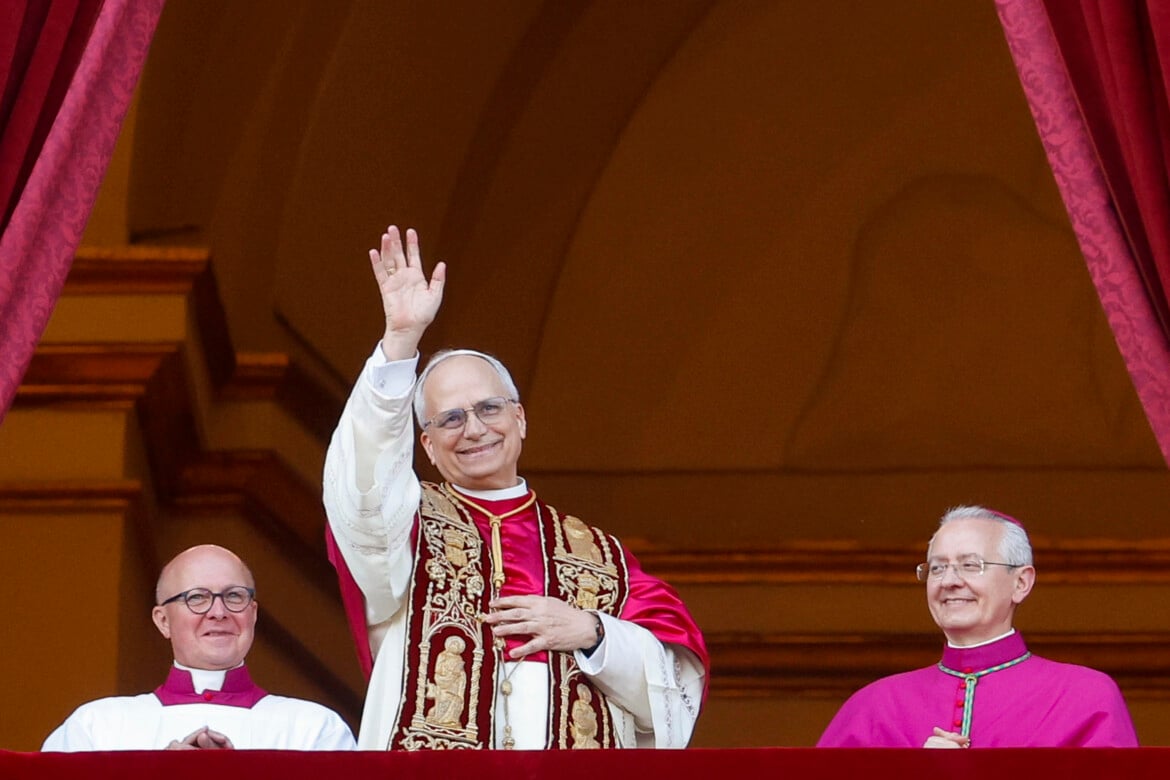
On the surface, it is not difficult to explain the hostility Donald Trump is displaying toward Pope Leo XIV. The current US president thrives on communication. This was his defining trait as a businessman and a factor he believes has been decisive to his success, and his approach to it explains how he thinks about politics.
In Trump's world, there is no notion of authority or credibility; the only thing that matters is being a celebrity, always in the spotlight. The fact that Leo XIV is challenging his position precisely through social media is therefore intolerable. If the pontiff had published an encyclical, Trump's reaction likely would not have been so immediate and aggressive. However, the spread of the pope's messages on X is a threat to him in what he perceives as his own domain.
However, if we truly wish to trace the root causes of the ongoing conflict between a segment of the US right and a pope born in Chicago, we must look elsewhere and try to understand why, in recent years, several key figures in the movement that accompanied Trump's political rise – and helped shape his ideological profile – have had a particular focus on the public role of the popes and the Catholic Church. We must consider not only the conversion of JD Vance but also the network of relationships that figures such as Steve Bannon and Kevin Roberts (the architect of Project 2025) or think tanks like the Acton Institute have long cultivated with the most reactionary sectors of the episcopate and Catholicism.
This is a relatively recent phenomenon in a country where Protestantism was historically dominant (one need only recall the suspicion with which certain circles greeted the election of John F. Kennedy, the first Catholic president), but today the majority of Christians in the US are Catholic. It is a complex game in which demographic dynamics (the weight of the Hispanic electorate) and resurgent white supremacist sentiments (the majority of Black people in the US are Protestant, specifically of the Baptist denomination) play a role. This, however, is only part of the story. If we look back in time to the distant origins of the movement that transformed the culture of the American right and brought Trump to the White House, we cannot overlook the influence exerted for several decades by William F. Buckley Jr. As a public intellectual, founder of National Review and talk show host, many scholars consider him the “grandfather” of the conservative revolution that reshaped the identity of the Republican Party.
However, Carl Schmitt is the author who can help us understand the theoretical core that accounts for Catholicism’s prominence for the American right today. He is cited by both prominent academics such as constitutionalist Adrian Vermeule, a proponent of “Common Good Constitutionalism,” and high-tech oligarchs like Curtis Yarvin and Peter Thiel, ideologues of the neo-reactionary “Dark Enlightenment” movement.
In a 1923 essay, Schmitt wrote: “The machine has no tradition. One of Karl Marx's seminal sociological discoveries is that technology is the true revolutionary principle, beside which all revolutions based on natural law are antiquated forms of recreation. A society built exclusively on progressive technology would thus be nothing but revolutionary; but it would soon destroy itself and its technology.” It is a statement with a prophetic tone, and it is read accordingly by the neo-reactionaries, who also take from Schmitt the idea that the Catholic Church is the only institution with the cultural and intellectual resources to prevent the ongoing technological revolution from ultimately devouring those who consider themselves its architects (and who derive the greatest amount of benefits from it).
It is no coincidence that the ideological offensive and political exposure of Yarvin and Thiel intensified following the crisis triggered by the COVID-19 pandemic. During that global event, two things came to light: the failure of neoliberalism as the guarantor of the order necessary for the revolution to continue without threatening the oligarchs' dominant position, and the aspiration of many service-sector workers to regain control of their own lives by renegotiating the distribution of time and space devoted to work.
The momentum gained by the global movement in defense of Palestinian rights and against the ongoing genocide in Gaza has further strengthened the neo-reactionaries' conviction that they are facing an existential challenge, one reminiscent of the threat Schmitt saw in communism. Hence their push to secure their position of dominance. For this goal to be achieved, the Church must take a side, aligning itself with a regime in crisis – the neoliberal one – which has created the conditions for its own demise, in order to restore its legitimacy. The last two popes, each in his own way, have made it clear that they are not willing to serve this oligarchic restoration. This is why they are considered enemies today.
Originally published at https://ilmanifesto.it/perche-prevost-e-il-piu-odiato-dai-neo-reazionari on 2026-04-17