
Analysis
‘We mark a failure’: A decade of war crimes against healthcare workers
UN Resolution 2286 was supposed to protect health workers. But in Iran alone, the Ministry of Health in Tehran has documented over 240 attacks on hospitals or treatment centers from February 28 to the present.
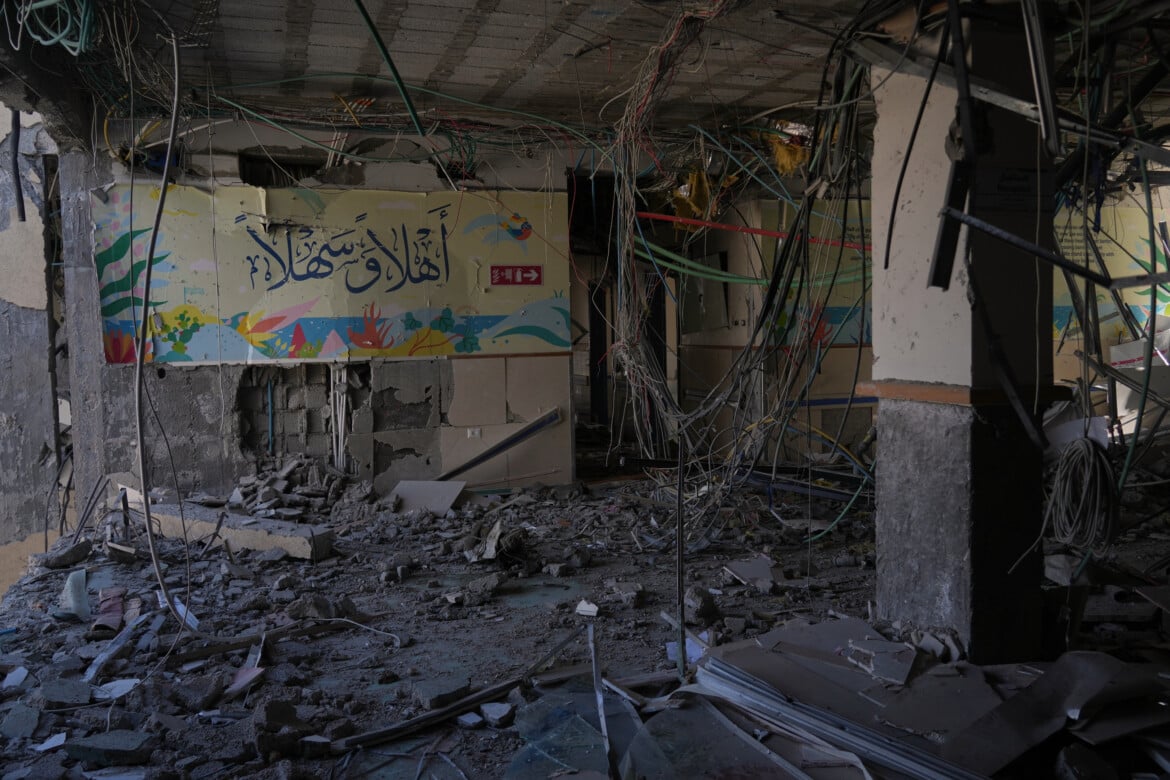
Healthcare workers killed, hospitals bombed, research centers targeted and facilities destroyed with the aim of stopping their operations – this is the scenario that increasingly defines contemporary warfare.
May 3 marked ten years since UN Resolution 2286, which condemns and classifies attacks on healthcare personnel and facilities as war crimes, and there is no achievement to be celebrated: instead, “we mark a failure,” according to the opening lines of the joint appeal signed by the Director-General of the World Health Organization (WHO), the President of the International Committee of the Red Cross and the International President of Doctors Without Borders, which urgently calls for concrete measures and pressure on those who fail to respect these norms.
In Iran alone – the most recent of the open fronts involving Israel and the United States – the Ministry of Health in Tehran has documented over 240 attacks on hospitals or treatment centers from February 28 to the present. Of these, 50 targeted facilities of national-level importance and an equal number struck emergency response and rescue bases. Furthermore, at least 41 ambulances have been destroyed, nearly 120 healthcare workers injured and 24 killed in the bombings.
A prime example was the attack on the Pasteur Institute, a health and research facility central to cancer treatments and vaccine production, which was left severely damaged. “Two of its departments have been working with WHO as collaborating centres,” WHO Director-General Tedros Adhanom Ghebreyesus noted on the X platform.
It’s hard to believe that such numbers arose from mere accidents, despite US Central Command claiming that the attacks on healthcare facilities were indirect, caused by shockwaves or necessitated by the Iranian army's use of these buildings as “human shields,” all without providing any compelling evidence to back this up.
The consequences of targeting the healthcare system are reverberating not only internally but also on the regional scale due to the disruption of the humanitarian medicine supply chain. The endemic polio crisis in Pakistan and Afghanistan, for example, risks a severe worsening due to the blockade of laboratory materials for treating the disease, valued at approximately $1.6 million. Since March 5, these supplies have remained hostage to the conflict.
Looking wider at the whole Levant region, however, it is now standard practice for Tel Aviv to strike hospitals and, above all, healthcare personnel through the “double tap” strategy – a bombing followed by a second attack as rescue teams arrive – or even the “triple tap,” hitting the rescue workers who come to the aid of the rescuers in turn, as happened, for instance, in Mayfadoun in southern Lebanon on April 15. In the latter country, due to the Israeli invasion and bombings, six hospitals and 50 primary healthcare centers have closed since March 4, with nearly 150 attacks on medical facilities or personnel. The Jabal Amel Hospital in Tyre has been struck five times in two months of war. Just on Monday, a raid in Srifa wounded five people, four of whom were paramedics.
The Palestinian testbed, where impunity has allowed Tel Aviv to turn the collapse of healthcare into a method of warfare, has paved the way for a strategy that is now widespread and fully established. In Gaza, nearly 2,000 healthcare workers have been killed during these years of genocide. According to Doctors Without Borders, 94% of the medical infrastructure has been destroyed; and one must add the repercussions of attacks on evacuation personnel: on April 7, 2026, the WHO suspended medical corridors to Egypt after the Israeli army killed Majdi Aslan, a contractor driving a vehicle rented by the organization. Israeli restrictions on the entry of humanitarian aid into the Strip are also taking a heavy toll: in a statement released on Sunday, the Gaza Health Ministry stated that “about 86% of the needs of laboratories and blood banks have become 'zero stock'.”
The toll is also tragic in Africa, where forgotten conflicts are becoming focused once more. The civil war in Sudan – which broke out on April 15, 2023 between the Sudanese Armed Forces and the Rapid Support Forces – currently leaves 21 million people without access to care, with 217 attacks on health facilities confirmed by the WHO resulting in over 2,000 deaths, 35 buildings struck in North Darfur alone, leaving the region with 80% of its facilities inactive and, overall, 40% of the hospitals across the country's 18 states not functioning. The same is true for the very young South Sudan, where the Doctors Without Borders facility in Lankien, Jonglei State, announced its closure on April 30 after 31 years of operation, leaving 250,000 people without access to surgical, pediatric and malnutrition care. The hospital had been bombed by South Sudanese government forces on February 3. These are telling figures, but they do not capture the full extent of the issue.
In 2016, upon the adoption of Resolution 2286, such attacks seemed like a red line we would pull back from; now they have become the norm. It is no longer a matter of placing limits on wars, but of stopping wars without limits.
Originally published at https://ilmanifesto.it/personale-e-strutture-sanitarie-sotto-attacco-a-dieci-anni-dalla-risoluzione-2286-segniamo-un-fallimento on 2026-05-05