
Reportage
They’ve created a desert: Southern Lebanon is the new Rafah
Israeli leadership is promising the entire world that it will subject Lebanon to the “Rafah doctrine,” named after the southern Gaza city destroyed by bombs, depopulated and literally razed to the ground.
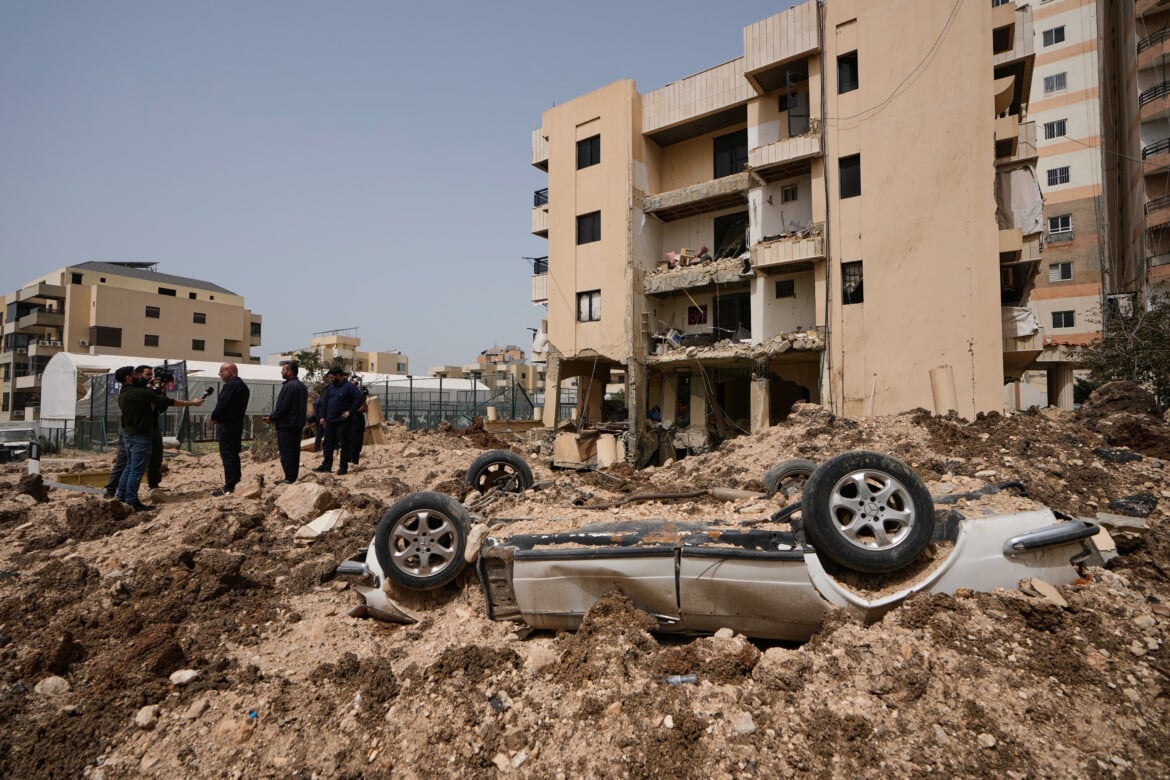
South of the Zahrani River, in the evacuation zone unilaterally imposed by Israel, the streets are empty. The highway can be traversed at high speed without slowdowns all the way to the Qasmiyeh Bridge over the Litani River, which was bombed on March 22.
At that point, you have to take a detour onto the provincial road that winds past rugged hills on the left; on the right, green banana groves stretch all the way to the calm blue sea. The provincial road sees plenty of northbound pickup trucks loaded with fruits and vegetables, but truck drivers and motorists no longer stop at the roadside shops and cafes. They are closed, with only a long row of pulled-down shutters visible.
Arriving at the Litani River, the small bridge is manned by the Lebanese army. Soldiers in olive camouflage control the crossing. Behind them is a small white and blue UNIFIL base, while the road ahead is lined with the large green and yellow flags of the Lebanese Shiite political parties.
This marks the entrance into the Tyre district, where fresh signs of Israeli attacks scar the asphalt: an Amana gas station has been gutted and turned into a deep crater (the Israeli army's Arabic-language spokesperson, Avichay Adraee, had announced strikes against the company, which is accused of having ties to Hezbollah). Further ahead, two cars lie destroyed by a pair of missiles that killed their drivers just hours earlier.
The city of Tyre is deserted. There are very few cars and no pedestrians in the streets. People gather only around hospitals, at the few bakeries that have remained open and at the small neighborhood shops that have not closed down.
On the waterfront, behind the famous Abu Deeb restaurant – which stubbornly still serves the best chicken shawarma in the entire region – three men and a young woman with a caged bird are smoking shisha. They switch between laughter and moments of worry as they look toward Naqoura, about ten kilometers south. Plumes of smoke and dust rising from the hills are signs of the ongoing fighting, and the ominous echoes of explosions signal much closer strikes to the east.
News from the front is confusing. Israeli troops are advancing but are taking hits from Lebanese guerrilla fighters. The Israeli army is trying to reinforce the front lines by setting up outposts in the few houses it doesn’t raze to the ground, but those areas are subjected to constant attacks.
Israel's declared strategy is to create a deserted “buffer zone” inside Lebanese territory, but it is unclear how deep it could reach or what function it might serve. Carving out a strip just a few miles wide would expose the military to continuous guerrilla warfare. On the other hand, the scenario of carrying out ethnic cleansing all the way to the Litani River – emptying out Tyre, Christian and Muslim villages and Palestinian refugee camps – would not strip Hezbollah of its ability to strike deep into Israel, given the guerrilla bases located north of the river.
Occupying part of the territory, however, fits into a modus operandi already witnessed elsewhere in the region: supporting identity-based parties and militias to undermine internal security, exacerbating sectarian tensions, destabilizing the country and its economy and bringing a state with already precarious institutions to the point of collapse.
What we are seeing now in the south of Lebanon is the risk of ecocide – with damage to water sources and the destruction and poisoning of the soil – alongside ethnic cleansing marked by the destruction of villages and the threat of expulsion for hundreds of thousands of people. These displaced individuals are now crammed into the homes of host families, inside schools turned into collective shelters or on the sides of roads. Those remaining in the area south of the Litani River for now are only about 15 percent of the resident population.
Those who stay are the ones who either don’t want to leave or cannot do so: the elderly, the disabled, farmers with fields and livestock, Christian communities pleading in vain with the Lebanese army not to withdraw from their villages, healthcare workers living inside hospitals, undocumented migrants and those who must keep working just to survive.
At the Lebanese Italian Hospital in Tyre (which is Italian in name only, chosen by the owner), some of the Syrian workers struck by an Israeli missile a few days ago are currently hospitalized. About 15 farmworkers were picking lemons in a field in broad daylight when an explosion killed five of them; the wounded were rushed to the hospital. Three remain in intensive care.
The hospital is trying to discharge them as soon as possible to keep beds available. Today, those beds are occupied by the victims of Sunday night's fresh bombings: two civilians and four paramedics who were subsequently struck during rescue operations in accordance with the “double tap” tactic.
Nightfall is considered the most dangerous time. In the evening, the Christian quarter by the port and the historic center of Tyre – home to the ruins of one of the oldest cities in the Mediterranean – fill up with people from other neighborhoods and surrounding villages. But those without cars or tents to sleep in, or those who cannot move, risk becoming targets or collateral victims of the decisions made by the Israeli Air Force and its targeting software. These programs calculate the “acceptable” number of innocent casualties based on the supposed value of the target to be struck. In the areas from which all residents have been expelled, systematic demolitions are carried out both day and night.
In Lebanon, we are witnessing a lexical slide into the abyss. Not long ago, Israeli generals announced the “Dahiyeh doctrine” for Gaza – named after the southern Beirut neighborhood devastated by the Israelis in 2006 – to describe total warfare against a densely populated area, using violence as a collective punishment and a strategic lever in the conflict.
Now, alongside the unimaginable levels of extermination witnessed in the Gaza genocide, the Israeli leadership is promising the entire world that it will subject Lebanon to the “Rafah doctrine,” named after the southern Gaza city destroyed by bombs, depopulated and literally razed to the ground.
It is a downward spiral of verbal and literal violence in which, at every new stage of the war, representatives of the Israeli state are delivering – and trademarking – a further level of cruelty to sow terror among neighboring populations.
Originally published at https://ilmanifesto.it/hanno-fatto-un-deserto-il-sud-del-litani-e-la-nuova-rafah on 2026-04-05