
Commentary
The costly delay building an Italian center-left coalition
It was the stunning reversal of predictions in Venice – with the defeat of PD candidate in the first round – that truly signals the right-wing coalition is still alive and well after the stinging defeat of its referendum on justice reform in March.
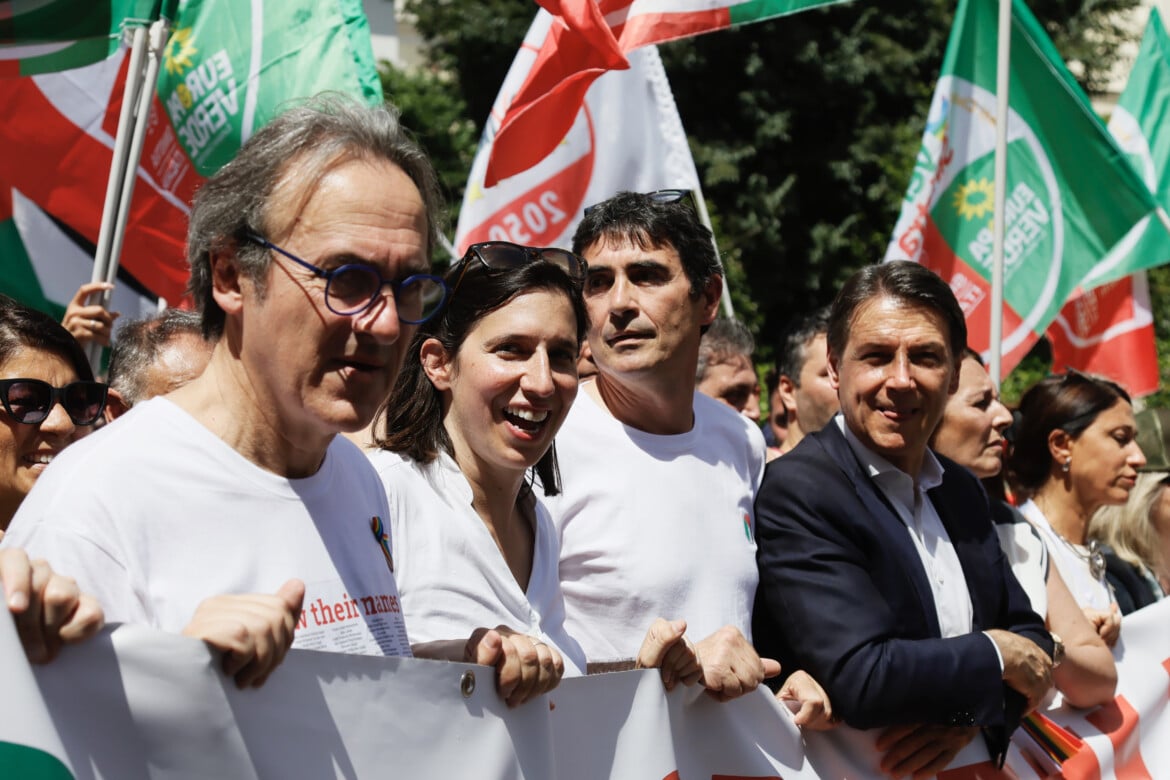
Every election is a story in itself, and the dynamics of a national referendum are vastly different from those of a local mayoral race. But given the resounding defeat of the right-wing government just two months ago, and the center-left’s near certainty that it could ride that wave to deal another blow to Prime Minister Giorgia Meloni in the May municipal elections – thereby kicking off a triumphant march toward the general elections – it is inevitable to try and draw a connection at the national level. And right now, that connection is showing the exact same pattern.
Setting aside the purely personal triumph of Vincenzo De Luca, who was just elected mayor of Salerno for the fifth time without the official backing of his own Democratic Party, the divided center-left was already defeated at the starting line in Reggio Calabria, where the Five Star Movement (M5S) did not even field a candidate. It is a partial picture, certainly, since local elections always see alliances of all kinds dismantled and reassembled. Nonetheless, it is indicative of the delays in forming a progressive coalition that remains merely virtual, despite the supposed progress made. Moreover, the defeat was even more resounding than expected.
But it was the stunning reversal of predictions in Venice – with the defeat of PD candidate Andrea Martella in the first round – that truly signals that the right-wing coalition is still alive and well after the stinging defeat of its constitutional referendum on justice reform in March. The right is clearly still in action, even if it appears to be in the throes of a crisis that goes well beyond mere jitters.
Meanwhile, the progressive, “yellow-red,” center-left, broad field – or whatever one wishes to call it – remains entirely insubstantial, precisely because of its vague definition and uncertain scope. It is fine to be stubbornly united, but if you spend all your time trying to endlessly connect the dots, at some point you lose yourself.
The PD and its allies are also suffering from a limitation common to the left in many places beyond Italy: the inability to effectively address and understand the needs of the suburbs in the broadest sense of the word. While Martella was a competitive candidate within the historic lagoon city of Venice itself, he was never truly in the running in the mainland areas that cover two-thirds of the municipality. In those mainland territories, anti-immigrant propaganda seems to have gained far more traction than the culture-war disputes over the appointment of a music director with ties to the Meloni government at the La Fenice theater or the clash over the Russian pavilion at the Biennale. It’s not hard to imagine what tune Meloni and her allies will be playing between now and the general elections, especially given the no-holds-barred electoral competition they will now face on the far right from Roberto Vannacci's new party.
It is up to the current opposition to avoid falling into the traps laid by the right on “security” and to figure out how to overturn this narrative. At the same time, they must put forward realistic proposals that address people’s actual priorities. Standing idly by on the shore while the country drifts away – and perhaps getting lost in internal leadership squabbles in the meantime – would only be the most effective way to give a helping hand to a right wing that may no longer have the wind at its back, but certainly does not seem to be sailing against it either.
Originally published at https://ilmanifesto.it/centrosinistra-i-ritardi-di-una-coalizione-da-costruire on 2026-05-26