
Commentary
The common thread between apartheid and state terrorism
If there is no international treaty that defines terrorism in a neutral manner, states are free to define it on an ethnic basis.
For decades, the global security debate has run up against a fundamental paradox: the absence of a single, unambiguous definition of international terrorism.
Despite numerous efforts at the UN, the international community has never managed to ratify a comprehensive treaty on the subject. This legal impasse stems from the inability to distinguish, in a universally accepted manner, between acts of terrorism and national liberation struggles, leaving individual states with a dangerous margin of discretion in labeling political violence.
An even thornier issue is covered by the same vacuum: the definition of state terrorism. While international law has the tools to prosecute war crimes or crimes against humanity, it struggles to classify cases in which a state directly commits a violent act with the intention of creating a state of terror, or facilitates, arms or guarantees impunity to private actors who carry out such an act for ideological purposes. This is exactly the core issue that is sparking unprecedented outrage among many liberal academics and activists in Israel.
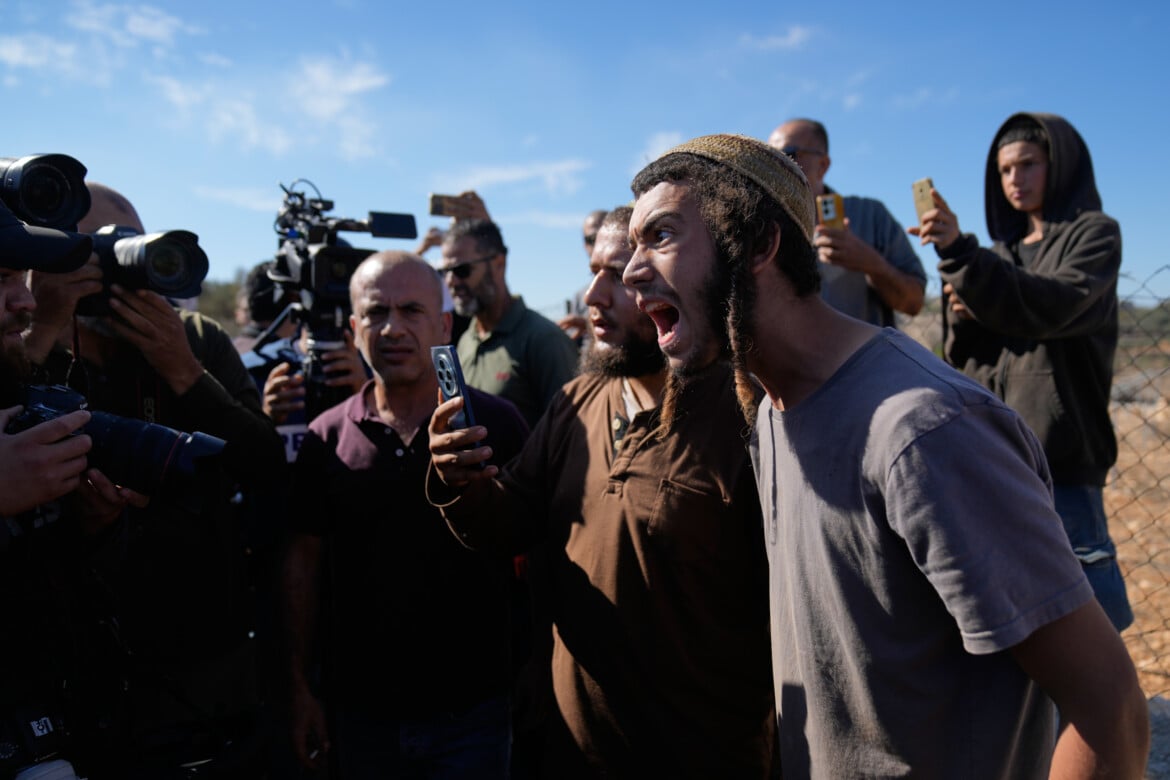
As over 600 Israeli academics belonging to the country's leading institutions have publicly denounced, extremist settlers in the West Bank have been using the conflict in Gaza over the past two and a half years to carry out veritable acts of terrorism against the Palestinian people. The objective is to conduct a systematic campaign of attacks against rural Palestinian communities to force their displacement and allow for the expansion of settlements.
Disturbing reports describe brutal assaults, such as the one that occurred in Khirbet Humsa, where beatings of minors and sexual violence were recorded. However, as reported by the daily Haaretz a few days ago, what transforms these criminal acts into a matter of international relevance is the suspicion that these are not isolated incidents, but rather a deliberate strategy protected by state authorities. At this point, the term “apartheid” is no longer used as rhetorical hyperbole, but as a legal category to describe the reality in the West Bank and Gaza.
The heart of the matter lies precisely in the failure of international law to ratify a single, unambiguous definition of terrorism. This “vacuum” has allowed Benjamin Netanyahu's government to manipulate the very concept of security, transforming it into a system of legal segregation. If there is no international treaty that defines terrorism in a neutral manner, states are free to define it on an ethnic basis.
The introduction of the death penalty with summary trials solely for Palestinians represents the final piece of an asymmetrical regime. In a democratic system, the law defines the crime; in this scenario, the law defines the guilty party based on the group they belong to.
For Palestinians, capital punishment applies without any fundamental guarantees of the rule of law. For Israeli settlers, conversely, there exists a gray zone of total impunity. Violence, house burnings and physical assaults are downgraded to civil incidents or, more often, ignored entirely by the authorities.
This is no longer a simple “conflict”: it is the consolidation of two separate and unequal legal systems operating within the same territory. When one legal system guarantees civil rights and protection to one group while reserving military tribunals and the gallows for the other, the definition of apartheid becomes a technical description of reality.
In this context, Israeli terrorism ceases to be a marginal phenomenon and becomes a function of the government. If the state grants immunity to settlers while simultaneously accelerating executions for Palestinians, it is effectively delegating political violence to private militias to achieve the ideological goal of displacement.
The academics' denunciation is therefore a cry of alarm over a genetic mutation of the legal system that codifies discrimination into law. As long as the international community hides behind the absence of shared definitions of terrorism, this system of legal apartheid can continue to thrive under the guise of the “fight against terrorism,” while in reality protecting one form of terrorism on the pretext of destroying another.
The indignation is no longer limited to a few niche activists. The university professors' petition marks a turning point: an explicit call for international intervention. Former political leaders, such as Ehud Olmert, have suggested the need for the International Criminal Court to become involved, while the United States and the European Union have already begun imposing targeted sanctions against individual settlers and organizations involved in the violence.
The intellectuals' appeal extends to the Jewish diaspora as well, which is called upon to reflect on how the current approach to security and the tacit endorsement of settler terrorism are further undermining Israel's moral legitimacy in the world. According to the signatories, “Jewish terrorism” is not an anomaly of the Netanyahu government, but a tool of its political agenda, which includes the de facto annexation of the West Bank through the uprooting of the Palestinian population.
While the world continues to debate on the definition of a “terrorist” in the 21st century, the reality on the ground in the West Bank and Gaza demands a more urgent reflection. If the rule of law is no longer able to apply equally to all, transforming punishment or impunity into a matter of ethnic identity, and if this is accepted at the international level, not only Palestinian lives would be put at risk, but also the very fabric of democracy and its image in the eyes of history.
Originally published at https://ilmanifesto.it/palestina-il-filo-rosso-tra-apartheid-e-terrorismo-di-stato on 2026-04-14