
Reportage
The ‘Board of Peace’ hasn’t delivered even a single bottle of water to Gaza
Donor countries continue to talk about relief and reconstruction plans – promises that have remained confined to political conferences and public statements, with little to no impact on the civilians living under siege.
Many European governments, while condemning Itamar Ben-Gvir’s humiliating treatment of the kidnapped activists of the Sumud Flotilla, continue to argue that the Flotilla is counterproductive and that this is not the way to help Gaza. These are the same governments that are taking no action whatsoever to alleviate the humanitarian crisis in Gaza. Some are even members of the “Board of Peace,” a council that, despite the billions of dollars promised, has not brought a single drop of water into the Strip.
Donor countries continue to talk about relief and reconstruction plans – promises that have remained confined to political conferences and public statements, with little to no impact on the civilians living under siege. According to information published by The Guardian, more than $7 billion have been pledged in “aid for Gaza.” However, only a tiny fraction of that amount has actually reached the Board: $23 million – 1.75 percent of the pledged funds – offered by Morocco and the United Arab Emirates. Not a single dollar has come from Donald Trump's United States, the creator of the Board, which had promised as much as $10 billion.
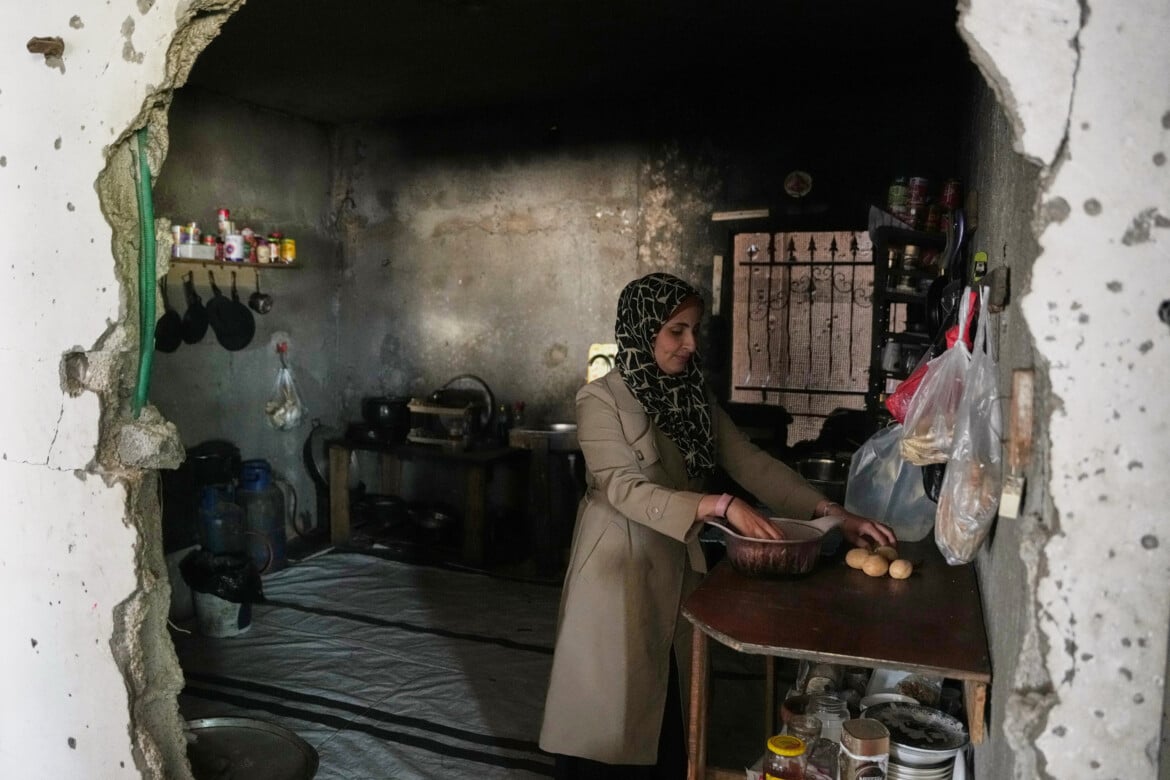
The UAE also reportedly put nearly $100 million on the table to fund a police force. Meanwhile, the people of Gaza continue to live in catastrophic conditions. Access to drinking water is a daily struggle for countless families after large parts of the water infrastructure were destroyed by the Israeli offensive. Restrictions and the blockade also prevent the entry of equipment and materials needed to repair the damaged systems.
Thousands of Palestinians are forced to wait in long lines every day to collect small amounts of water, the vast majority of which is undrinkable. Water is a luxury.
The water shortage is a direct threat to life, with diseases spreading rapidly and health conditions deteriorating, especially among children and the elderly. Constant power outages and fuel shortages have paralyzed desalination plants and water wells. Despite repeated international declarations on the need to “improve humanitarian conditions,” a massive gap remains between political rhetoric and reality. The Board has failed to bring even a single bottle of water into the territory since its inception – a symbol of the broader failure of international policies and mechanisms designed to support civilians.
Questions have also been raised regarding the salaries and financial perks tied to the Board. According to some sources, each Palestinian member receives $16,000 to $17,000 per month, in addition to nearly $400,000 a year allocated for the “representation expenses” of Board Director Nickolay Mladenov, reflecting the deep divide between the political leadership and the population.
At the same time, several countries have reportedly begun to withdraw or reconsider their financial commitments following what has been described as the “failure of international force deployment plans” and the absence of tangible results on the ground. Humanitarian and human rights organizations have repeatedly warned that the continued obstruction of aid delivery could lead to an even more severe catastrophe, particularly due to the collapse of Gaza's healthcare sector and the continuous rise in malnutrition rates and waterborne diseases. They stress that using humanitarian aid as a political bargaining chip only exacerbates civilian suffering and prevents essential supplies from reaching those who desperately need them.
According to analysts, the crisis highlights the international community’s inability to establish effective mechanisms to protect civilians and ensure the steady supply of humanitarian aid. While conferences are held and billions are announced in front of the cameras, Palestinian families in Gaza continue to live surrounded by destruction, thirst, hunger and uncertainty.
As the war and the blockade continue, fears are growing about a total collapse of Gaza’s humanitarian infrastructure. A large part of the territory’s essential services has already been destroyed, while restrictions on the entry of aid remain firmly in place.
Against this backdrop, serious questions remain about the fate of the billions promised in the name of Gaza and the effectiveness of international councils and bodies that speak of relief efforts while civilians continue to struggle for the most basic human need of all: drinking water.
Originally published at https://ilmanifesto.it/i-soldi-pochi-del-board-spesi-in-stipendi-a-gaza-nemmeno-una-bottiglia-dacqua on 2026-05-23