
Commentary
Thatcher’s final legacy: Systemic crisis
The Greens are facing a disproportionate challenge and time is running out. Once what remains of British public institutions has been subordinated to the imperatives of the High-Tech oligarchs, the change could become irreversible.
At one point in Jonathan Coe’s latest novel The Proof of My Innocence, a Tory intellectual who had been a staunch supporter of the Thatcherite revolution muses on how people like him had truly thought that the UK was going to change for the better – but somewhere along the way, at some undefined point, things took a horrible turn for the worse.
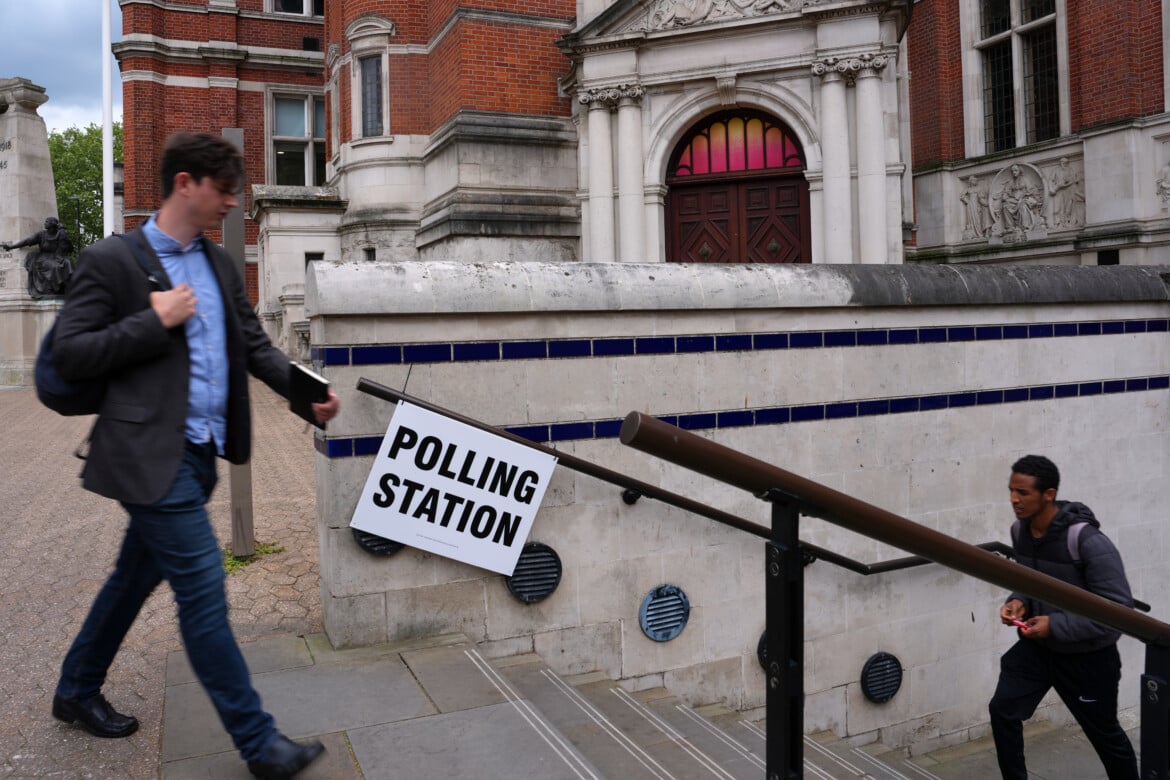
Coe is one of the writers who has best chronicled British society since the election of Margaret Thatcher. We can start with him to put into perspective the devastating (and entirely expected) defeat of both Keir Starmer’s Labour Party and Kemi Badenoch’s Conservatives in the latest local elections.
For Coe, the explanation for the disappointment expressed by his character can be found in the failure of that political project: “Remaking the world in their own image and still not liking what they see.” It is a dream of restoration that paves the way for a hellish machine capable of destroying the very things it sought to preserve.
Even though the official birth of the Conservative Party dates back to the early 1830s, the Tory faction had already taken on a recognizable character at the beginning of that century, during the time of the Napoleonic Wars. In the 20th century, the Conservatives played a dominant role in the British parliament right up until the fall of the government of John Major, Margaret Thatcher’s successor, in 1997.
That unparalleled success story seems to be nearing its end. It is not just a question of votes or of seats won (the two must always be considered separately in the United Kingdom), but of the ability to articulate a distinct and coherent vision.
In recent years, the Tories have slid inexorably to the right in a desperate attempt to win back voters which have been drawn towards political factions claiming to be the pure, hardline heirs of Thatcher and her plan to restore the status of a major military and economic power to a country that had lost a large part of its colonial empire, was liquidating its industries and was witnessing the waning appeal of the last of the symbolic resources (starting with the monarchy) that had fueled its soft power.
The Tory intellectual in Coe’s novel realizes that the final outcome of the Thatcherite restoration is not a return to a glorious past, but an acceleration toward a future whose characteristics bear the stamp of the American New Right and those who were reshaping its ideological profile. Figures such as Barry Goldwater, William F. Buckley Jr. and Milton Friedman showed the path, and British conservatives enthusiastically walked it to the very end. Resistance came from the left: the Labour Party, the trade unions and protest movements such as the one against the Poll Tax, but it failed to reverse a trend that, after 1989, seemed to be pushed forward by the prevailing winds of history.
When the Conservatives finally lost the elections, defeated by Tony Blair, the hegemony that they had established in the 1970s did not truly wane with the ascent of New Labour. Among the first to understand this was Stuart Hall, who had drawn on Antonio Gramsci's lessons to explain to a left that had lost its bearings that Thatcher's greatest success had been on the level of popular culture: changing people's minds.
While the Conservatives seem destined to disappear, Labour is grappling with a fracture that could prove fatal in a short amount of time. Today we have enough evidence to say that the political objective of those who supported Starmer's candidacy for leadership was not to provide a left-wing response to the profound economic and social crisis in the United Kingdom, but rather to prevent such a response altogether – offered, sooner or later, by someone able to carry on Jeremy Corbyn's legacy with greater effectiveness. What puts Labour's survival at risk is not the growth of Nigel Farage's Reform UK party, but the exit to the left of a substantial portion of voters who do not identify with the “Fourth Way” proposed by Starmer.
If the face of today’s capitalism is that of Elon Musk, Peter Thiel or Curtis Yarvin, what is needed is a left that can find the courage to take the bull by the horns while that is still possible. It is impossible to predict whether the Greens will be able to accomplish this. They are facing a disproportionate challenge and time is running out. Once what remains of British public institutions (healthcare, education, an impartial judiciary, free elections and independent media) has been subordinated to the imperatives of the High-Tech oligarchs, the change could become irreversible.
At the end of this film, there won’t be a James Bond to come in and save “Crown and Country.” After the last wave of privatizations, the agent will have been replaced by an AI program that manages a fleet of drones.
Originally published at https://ilmanifesto.it/crisi-di-sistema-lultima-eredita-della-thatcher on 2026-05-09