
Analysis
Tajani acquits Netanyahu and blames Ben Gvir alone – what about the others?
Italian prosecutors are ready to proceed with charges of kidnapping, torture, robbery and causing damage with the risk of shipwreck of the flotilla eight months ago. The only missing element is the suspects.
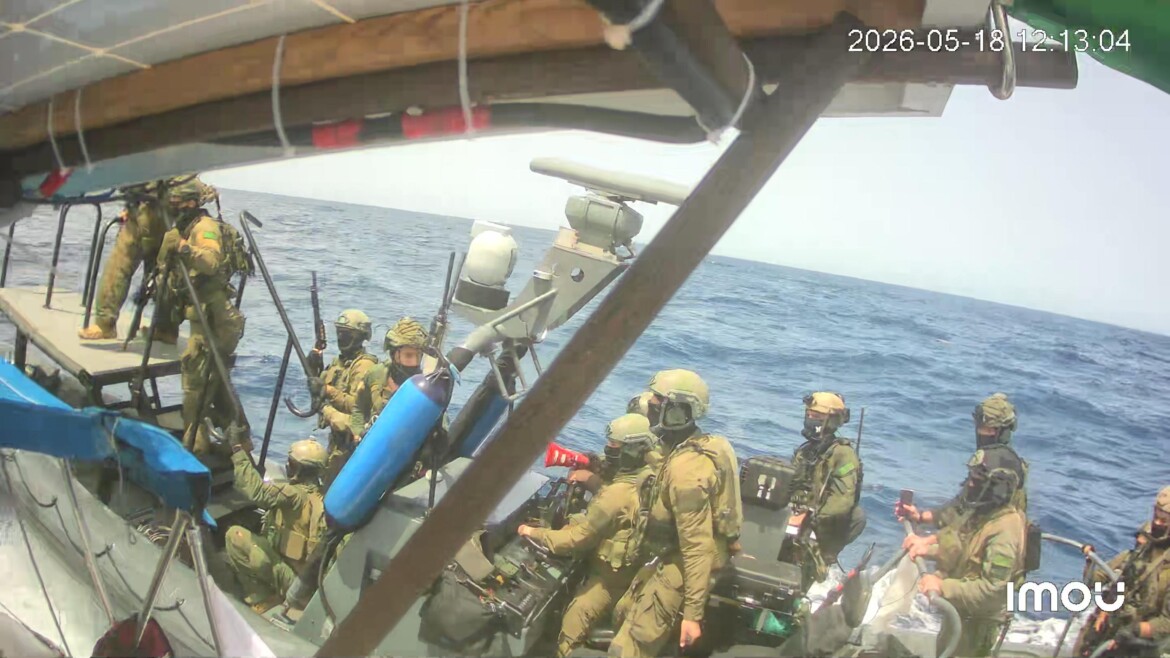
“Statements are one thing, and facts are another,” says Italian Foreign Minister Antonio Tajani. If he were speaking about the Italian government’s stance toward Israeli crimes, one could not help but agree with him and appreciate his belated but highly on point self-criticism. Yet his words, spoken to reporters on the sidelines of the National Conference on Development Cooperation held on May 26 in Rome, were actually meant to rule out the possibility of sanctioning the entire Israeli government. Because while what happened last week to the Flotilla’s crew was admittedly a serious matter, there is one and only one culprit: “Security Minister Ben-Gvir.”
After all, Tajani argues, the mistreatment of the activists was carried out “by people who report to him” and “everything was done on his orders.” It was Itamar Ben-Gvir who crossed “the red line of violence against people who were protesting and who had committed no crime.” True, as far as it goes. But what about the others? “Both Prime Minister Benjamin Netanyahu and Foreign Minister Gideon Sa’ar have condemned what Ben-Gvir did. Therefore, he is responsible for that incident. That is why we are sanctioning him.”
So much for the statements. Then there are the facts. These are much more nuanced, and, at least for now, are being brought to light for the most part at the Rome prosecutor’s office at Piazzale Clodio. At the moment, there is just one officially open front regarding the Flotilla affair, and it concerns the attacks suffered by the mission eight months ago. For those incidents, Deputy Prosecutor Lucia Lotti and Assistant Prosecutor Stefano Opilio, coordinated by Chief Prosecutor Francesco Lo Voi, are ready to proceed with charges of kidnapping, torture, robbery and causing damage with the risk of shipwreck.
The only missing element is the suspects. These would be the Israeli military personnel who intervened in international waters and the police officers responsible for the detentions, first at the port of Ashdod and then at Ketziot prison. On May 9, a request for letters rogatory was sent to the Italian Justice Ministry regarding Israel, and it has yet to deliver a response. The ministry has until June 8 to forward the request to Israel or decline to do so on grounds of security or national interest. If it fails to respond at all, this would allow the judicial authorities to proceed independently through the embassy.
Regarding Tel Aviv’s latest attack against the Global Sumud Flotilla, the prosecutor’s office intends to move forward with some urgency. This is why hearings began as early as May 21 – two days after the boarding 120 nautical miles off the coast of Gaza and the subsequent deportation to Ashdod. They started first with Five Star Movement (M5S) parliamentarian Dario Carotenuto and then with Il Fatto Quotidiano journalist Alessandro Mantovani. The other 46 Italians involved are set to follow in turn, while the legal team of the Global Sumud Flotilla prepares new criminal complaints. This is very important material: the 80 pages drafted on the October attacks turned out to be essential for the preparation of the first case file, the one currently on hold pending the outcome of the letters rogatory.
The problem is that to some extent there is now more political pressure on the prosecutor’s office than in the past. It is primarily the Italian government, in fact, that is pushing for the “one bad apple” Ben-Gvir to be officially put under investigation, but investigators are being very cautious on this point. This is because the legal framework is complex and because he is certainly not the only villain in this story.
Some facts are public and indisputable. For instance, on the day of the attack on the flotilla, Netanyahu was in the Israeli navy bunker. It is hard to argue that he is any less responsible than Ben-Gvir. Another name being discussed “in the abstract” is that of Defense Minister Israel Katz. And then there is the head of the IDF, Eyal Zamir – who, for his part, denies all charges and claims to have had nothing to do with the recent events.
Getting from this evidence to the proceedings of a judicial investigation remains difficult, however. Political crimes committed abroad – which is how torture and kidnapping are classified in this context – can only be prosecuted at the request of the Justice Ministry.
In the case of Giulio Regeni and Egypt, the matter escalated into a diplomatic clash. Ultimately, the Constitutional Court intervened to rule that the four Cairo agents accused of the researcher’s murder could be tried in absentia since they were aware of the investigation opened against them in Italy. But there, the crux of the matter concerned the possibility of holding a trial; here, we are still at the stage of compiling the case file.
And the playing field is entirely different. There are two other frameworks that apply: the UN Convention Against Torture, which grants broad powers to the authorities of the country where the torture took place, and the 1959 European Convention on Mutual Assistance in Criminal Matters (Strasbourg), which concerns letters rogatory and requires “the widest measure of mutual assistance.”
In theory, Israel is also a signatory of the latter treaty. But it is highly unlikely to cooperate. Tajani is absolutely right: statements are one thing, and facts are another.
Originally published at https://ilmanifesto.it/colpa-di-ben-gvir-flotilla-tajani-assolve-netanyahu-e-gli-altri on 2026-05-27