
Analysis
‘Partners, not rivals’ discuss Tehran and Taiwan but avoid any commitments
It appears that Trump’s visit will result in a stabilization of the relationship, but without a structural and in-depth agreement.
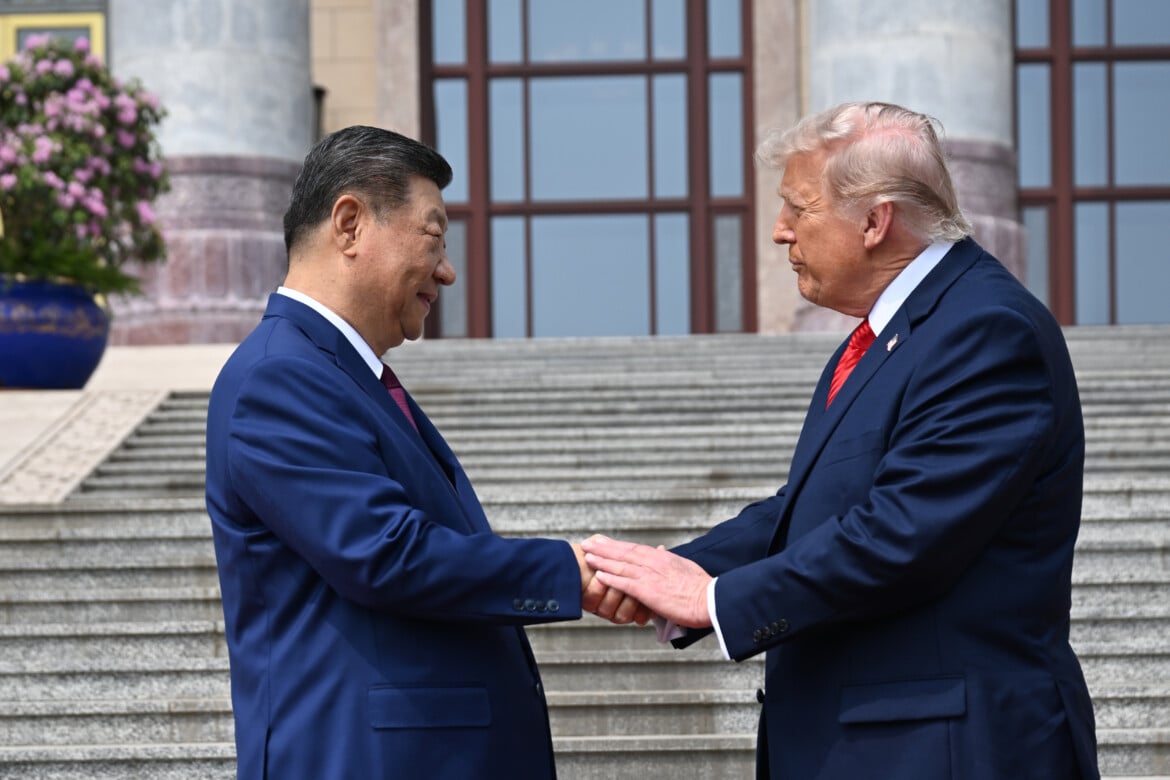
“We're going to have a fantastic future together. It's an honor to be with you. It's an honor to be your friend. The relationship between China and the USA is going to be better than ever before,” said Donald Trump, immediately lavishing compliments on the host. “The world has once again reached a new crossroads. Can China and the United States overcome the Thucydides Trap and create a new paradigm of major-country relations?” asked Xi Jinping, referring to the formula analysts use to invoke the risk of a conflict between a hegemonic power and an emerging one.
The two passages from their respective opening remarks at the highly anticipated summit in the Great Hall of the People already said a great deal about the new balance between the leaders in Washington and Beijing. The first – welcomed on Tiananmen Square by an honor guard, a 21-gun salute and children with bouquets of flowers and little flags – was seeking a personal connection. The second, more calculated, focused on strategic issues of global significance.
Xi expressed his hope that the two countries could be “partners and not rivals,” saying he expected a positive turning point in relations. But he also warned that China and the United States could “collide or even come into conflict” if the Taiwan issue were “mishandled.” Meaning: if the United States were to support Taipei’s independence or continue to accelerate arms sales. It was a very explicit message that placed Taiwan squarely at the center of the discussions.
The meeting lasted over two hours, longer than the previous summit in Busan where the trade truce was signed. Both parties gave positive accounts of the discussions, but the priorities differ. China is insisting on the concept of “constructive strategic stability,” a new formula launched on Wednesday by Xi for relations between the two countries. Beijing views Trump’s visit as the recognition of a relationship between equals.
The United States, on the other hand, is focusing on economic results. Specifically, China reportedly agreed to increase purchases of American agricultural products, including soybeans and beef. According to the White House, Xi reportedly expressed a willingness to increase energy imports, including oil and liquefied natural gas: one of the key points of Washington’s demands. Beijing also reportedly committed to purchasing 200 Boeing civilian jets, less than half of the 500 that were being discussed on the eve of the summit. There is also an agreement to strengthen controls on the movement of chemicals useful for the production of the opioid fentanyl, which opens the door to an extension of the tariff truce and a partial downward adjustment of customs duties.
Discussions are also underway on setting up an investment council, which would allow Chinese companies to invest in the United States in non-sensitive sectors. An announcement of joint guidelines for the use of artificial intelligence is also possible. Despite the presence of Nvidia CEO Jensen Huang, there didn’t seem to be any breakthroughs on chips or rare earths, the two sides’ respective main bargaining chips. In this regard, the absence from the summit of Ding Xuexiang, the vice premier with the portfolio for technology policies, and Wang Xiaohong, the minister of public security and a key figure in discussions on strategic metals, is significant.
This is a sign that Beijing is not pushing forward, signaling confidence in its ability to reduce its exposure to American technology and suggesting that mutual interdependence is currently working in its favor. Thus, it appears that Trump’s visit will result in a stabilization of the relationship, but without a structural and in-depth agreement.
On strategic issues, the two sides are focusing on different topics. The White House’s account focuses on Iran in much more detail. Trump and Xi reportedly agreed that the Strait of Hormuz must remain open, thus opposing the imposition of tolls. Both reportedly emphasized that Iran must never possess nuclear weapons, even though China continues to support Tehran on the civilian use of nuclear energy. There are, however, no specific commitments regarding negotiations or interventions by China, which does not want to get directly involved in the crisis.
The Chinese account, on the other hand, dwells on Taiwan, a topic that is not mentioned at all by the US side. We don’t know how Trump responded to Xi’s clear stance, although Marco Rubio explained that US policy on Taipei will not change. He added in an interview with NBC that Beijing would like the island to “willingly, voluntarily join them,” acknowledging the priority Xi places on so-called “peaceful reunification.”
After the summit, the two leaders moved to the Temple of Heaven, an ancient symbol of the Chinese empire, to conclude the day with a state banquet featuring a menu based on dishes from the Shanghai region: lobster in tomato soup, crispy beef short ribs, roast duck, salmon and pork bao. Trump seemed to enjoy it, so much so that he allowed himself a very rare sip of white wine, despite being a teetotaler.
There were no explicit references to Jimmy Lai, the Hong Kong publishing magnate recently sentenced to 20 years in prison. Trump had said he would ask Xi for his release. What he certainly did do was ask the Chinese president to visit the White House in September. This is a sign that both sides want to try to stabilize a relationship that is now on equal footing.
Originally published at https://ilmanifesto.it/xi-partner-non-rivali-degli-usa-ma-guai-a-gestire-male-il-nodo-taiwan on 2026-05-15