
Analysis
New blow to FdI from the EU over anti-corruption law
‘We are in the midst of a deep political crisis, which Giorgia Meloni needs to seriously address, without looking for shortcuts. And she should be held accountable for it in Parliament. Not with an Instagram video.’
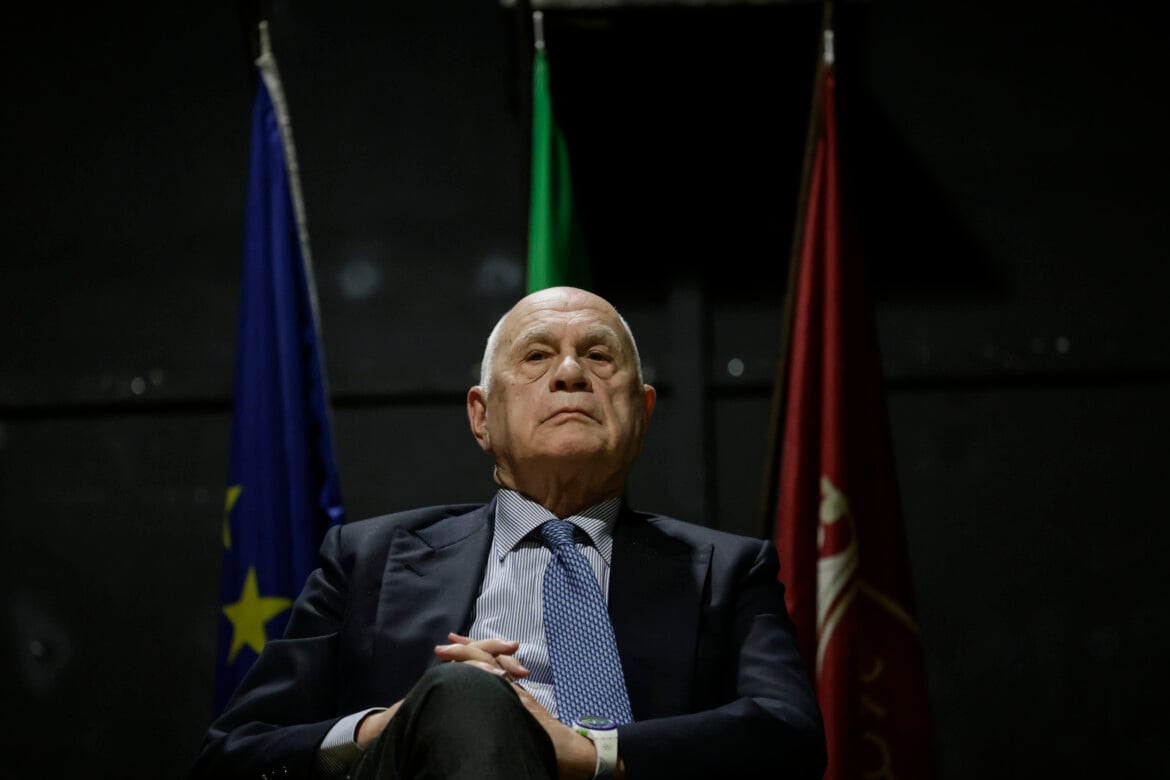
There is no rest for Giorgia Meloni's majority. Problems, once again on the justice front, are now coming from Europe as well. The European Parliament has approved the anti-corruption directive by a massive majority, and the opposition in Italy is celebrating what it considers another blow to the government's justice policies and to faltering Justice Minister Carlo Nordio. Two years ago, the justice reform bill bearing his name abolished the crime of abuse of office in Italy.
The new directive establishes the specific types of corruption that must be criminally prosecuted. The list features an article dedicated to the abuse of office, defined as the “unlawful exercise of public functions.” The text requires member states to adopt the necessary measures to “ensure that at least certain serious breaches of the law in the performance or omission of an act by a public official in the exercise of their functions are punishable as a criminal offence.”
“Meloni and Nordio abolished this crime to favor politicians and white-collar workers who abused their power in public competitions and tenders,” attacked Five Star Movement leader Giuseppe Conte. “But now they will have to reintroduce it. The Italian government tried right up to the very end to block the passage of this directive, but it found itself isolated in Europe.”
Democratic Party Foreign Affairs Spokesperson Peppe Provenzano framed the issue within the context of the majority's overall difficulties: “We are in the midst of a deep political crisis, which Giorgia Meloni needs to seriously address, without looking for shortcuts. And she should be held accountable for it in Parliament. Not with an Instagram video.”
A YouTrend survey – which calculates the weighted average of national polls on voting intentions conducted from March 12 to March 25 – is in line with the recent referendum results: it records Brothers of Italy dropping to 28.2 percent, the Five Star Movement on the rise and, most importantly, the progressive bloc (made up of the Democratic Party, the Five Star Movement, the Green and Left Alliance, Italia Viva and +Europa) overtaking the center-right.
Among the difficulties, one must also consider the coalition's internal conflicts over the tariff agreement with the US: the Lega voted against it, while Forza Italia and Brothers of Italy sided with the Ursula von der Leyen majority in favor. It’s not the first time this has happened, but given the level of internal strife, it really stands out.
Among Italian MEPs, the only one to vote against the anti-corruption directive – which was opposed by certain far-right figures – was the Lega’s Roberto Vannacci. Nicola Procaccini, co-chair of the European Conservatives and Reformists (ECR) group and a member of Brothers of Italy, argued instead that the text reaffirms that member states “have full freedom in choosing the most effective tools to combat corruption. It emerges clearly that Italy already has such tools in its legal system. Therefore, there is no need, under the directive, to reintroduce the crime of abuse of office.”
The right wing's idea is that the text – which was proposed by the European Commission three years ago and has undergone several revisions during negotiations and its passage through Parliament – refers to “certain serious forms of unlawful exercise of public functions.” According to this interpretation, in short, it would allow member states flexibility in how they apply it.
But the rapporteur herself, Raquel García Hermida-Van Der Walle, a Dutch member of the Renew Europe group, explained that following the anti-corruption directive, Italy “will have to mandatorily criminalize at least two of the most serious crimes falling within the scope of the [abuse of] office offence.”
To those invoking the position of Brothers of Italy and the Lega – who argued that the provisions of the directive are already covered by existing crimes in Italian law – Van Der Walle replied bluntly that while it was not her place to get into the merits of the definitions with the Italian government, in her view, if they did not consider the issue that important, they wouldn’t have opposed it so strongly.
Giuseppe Busia, president of Italy's National Anti-Corruption Authority, also emphasized that the directive establishes the specific circumstances that must be classified as crimes by EU countries. “Unfortunately, in recent years, Italian legislation to combat and prevent corruption has suffered several setbacks,” Busia noted. “We hope that the swift implementation of the directive will provide an opportunity to immediately fill some of the gaps in protection that opened up with the repeal of the crime of abuse of office, thereby strengthening citizens' trust in public institutions and thus improving the quality of our democracy.”
Originally published at https://ilmanifesto.it/reintrodurre-labuso-dufficio-dallue-nuovo-colpo-al-governo on 2026-03-27