
Reportage
Nails, locks, wood and plastic: Recycling the rubble to rebuild Gaza
Reconstruction has become a complex challenge that anyone who has lost their home is facing. The question is no longer “how do we rebuild?” but “with what do we rebuild?”
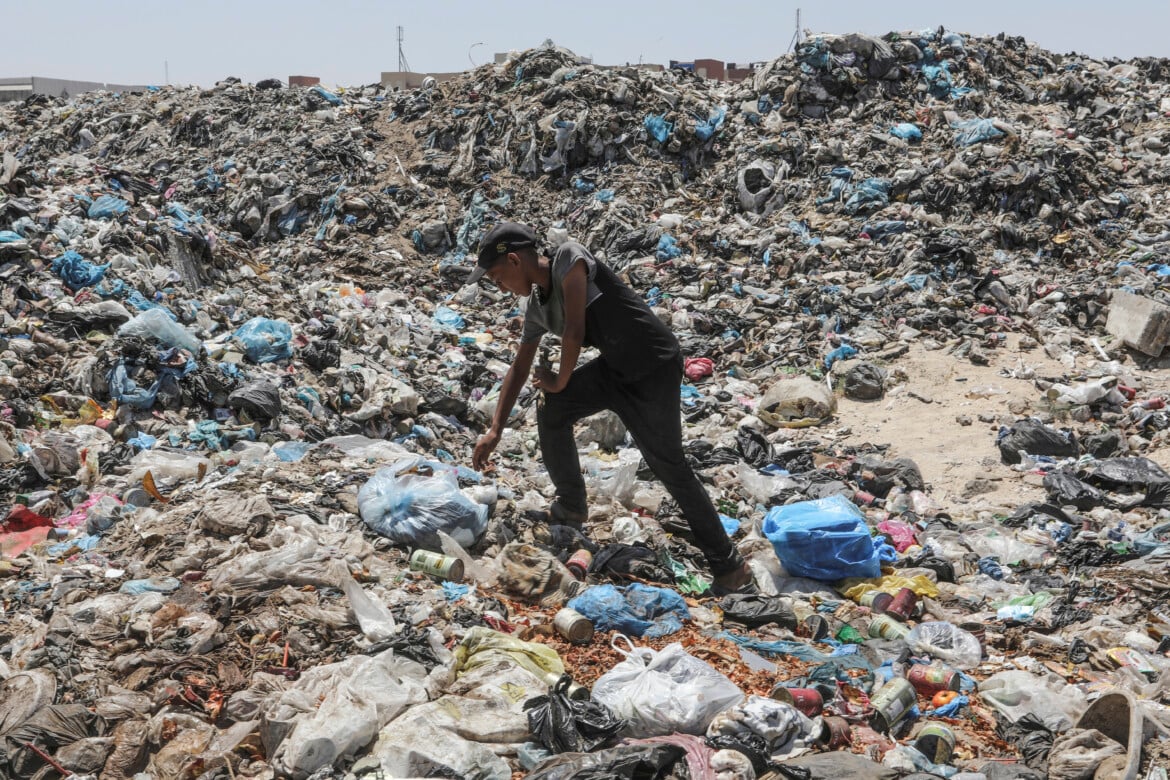
Nails, steel, cement and much more – there is a long list of items that have been banned by Israel from entering Gaza, forcing residents to resort to an emergency solution: “forced recycling.”
According to data from the Gaza government media office, approximately 90% of homes have been completely or partially destroyed. The severe restrictions on the entry of essential construction materials have not stopped survival efforts; on the contrary, they have pushed residents toward alternative solutions. The rubble of destroyed homes has become the only available source of materials and “forced recycling” has turned into a daily reality: an attempt to repair what can be repaired, or at least ensure minimal protection inside tents that offer scant defense against the summer heat or the winter cold.
This widespread destruction cannot be measured by numbers alone: it is directly reflected in the smallest details of daily life. Reconstruction has become a complex challenge that anyone who has lost their home is facing. The question is no longer “how do we rebuild?” but “with what do we rebuild?” Here begins the journey through the rubble, where many spend long hours dismantling the remains of their destroyed homes to extract nails or reusable pieces of metal in an attempt to create a temporary shelter or reinforce a fragile tent barely able to withstand the wind and rain.
This is “forced innovation” – recycling is no longer an environmental practice, but a daily necessity imposed by the siege. From nails carefully extracted from broken wood and straightened for reuse to metal fragments recovered from under the rubble and reshaped, continuous efforts are emerging to create alternatives out of nothing. Fabrics and plastic are also used in unconventional ways to insulate tents or fill gaps.
This kind of innovation is driven not so much by creativity, but by a reality devoid of even the most basic resources, where survival itself becomes a daily project requiring effort and imagination. In a recurring scene in the devastated neighborhoods, men and youths can be seen gathering what remains of their homes, searching not only for memories but also for usable materials.
The debris is carefully sorted; nails and small pieces of metal are collected in plastic bags while parts of walls and roofs are dismantled to be reused in the construction of what can only be described as temporary shelters. These processes, despite their apparent simplicity, require considerable time and effort and are often carried out in unsafe conditions, with limited tools and no real alternatives, making every attempt at reconstruction a daily act of facing destruction itself.
Scrap is being transformed into a lifeline: makeshift stalls selling materials salvaged from destroyed homes have evolved from a means to collect scrap into a primary source of shelter for many families. In most areas, you can see small kiosks selling nails, locks, spare parts and various household items. These are not new; they are extracted from under the rubble, sorted and cleaned, despite showing traces of burns or partial damage.
The nails are used to secure tents, while the locks protect what remains of families' personal belongings. Spare parts, kitchen utensils and other simple yet essential items are on display, in a scene that repeats itself across many different areas.
Individual stories reflect the true meaning of “forced innovation.” Abu Rami, a displaced person, recounts how he salvaged tools from the rubble of his home and other houses, reusing them to build doors, windows, kitchen utensils and even partially functional electrical devices. He explains his role within this parallel market: he collects scrap from destroyed homes and restores whatever can be salvaged to provide alternative spare parts for those who have lost even the most basic necessities.
Another displaced person, Wasim, converted a damaged door into the entrance to his tent, along with other items that helped him rebuild a livable space despite the scarcity and high cost of the materials that are available. He explains how he started from the rubble: gathering scattered pieces of wood to build a tent, using the door as a barrier to keep stray animals out, repairing a partially broken chair to use as a toilet and patching together a clothesline using rudimentary means.
The entry of construction materials into Gaza has long been subject to severe and ongoing restrictions. Many essential materials – cement, steel and aluminum – are classified as “dual-use” items, meaning that, according to Israel's justification, they could be used for both civilian and military purposes.
Based on this classification, their entry is restricted or entirely prohibited at various times, with only small quantities permitted and subjected to complex control mechanisms. Israel justifies these measures on security grounds, invoking the need to prevent the reconstruction of military infrastructure.
However, the continuation of these restrictions – despite the massive scale of destruction and the urgent need for reconstruction – has led to an almost total paralysis of the rebuilding process, forcing people to resort to alternative solutions. Although these policies are presented as security measures, many observers and humanitarian organizations are pointing out that they prolong the humanitarian crisis and exacerbate the impact of the destruction on the lives of civilians in Gaza.
These scenes do not merely reflect individual attempts at survival; they reveal a reality in which the rubble itself becomes an alternative building material. As destruction transforms into a resource and the remains of homes are recycled to guarantee the bare necessities of life, a deeper question remains regarding the sustainability of this mode of survival and the limits of people's ability to endure without genuine reconstruction. While residents continue to invent solutions amid the ruins, this “innovation” stands as a testament to their resilience but also as a stark indicator of the severity of the humanitarian crisis.
Originally published at https://ilmanifesto.it/chiodi-serrature-legno-plastica-riciclare-le-macerie-per-ricostruire-gaza on 2026-04-28