
Analysis
Meloni, running on empty, plays stateswoman too late
We’ve come a long way from her slogans about “energy sovereignty” needed to “avoid ending up at the mercy of tyrannies” from her previous election campaign.
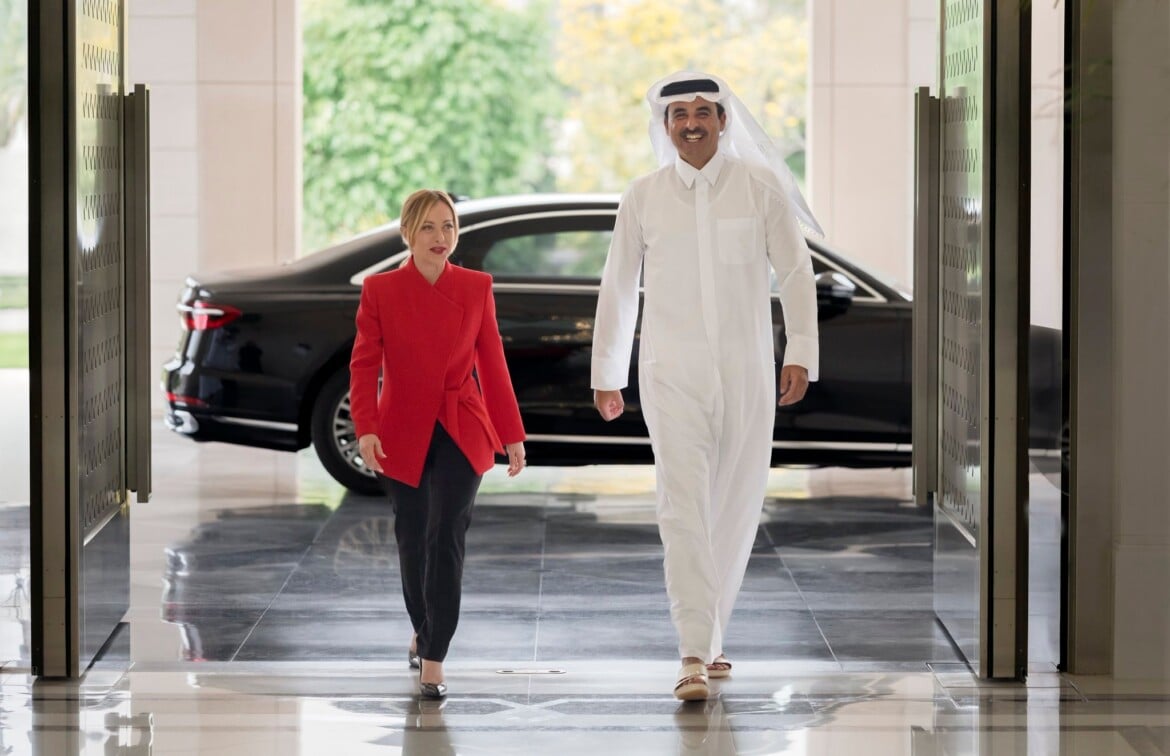
Giorgia Meloni has returned to Italy after her surprise trip to the Gulf states. The “stateswoman,” as her party colleagues dubbed her after news of the tour broke, traveled to Saudi Arabia, the United Arab Emirates and Qatar to express “solidarity” and to “show her focus on Italian families and businesses.” In other words: to scrape together assurances regarding gas supplies.
Italy is suffering more than other countries from the resource shortages stemming from the war in Iran, given its structural dependence on foreign energy. This dependence has been exacerbated by the right-wing government, which harbors a historical hostility towards renewable energy. The government's Mattei Plan for Africa has failed, and the electorate has taken notice.
It was a lightning-fast but belated trip: diesel is nearing €3 per liter, as Economy Minister Giancarlo Giorgetti admitted on April 2. And Italian airports are struggling. Milan Linate, Venice Marco Polo, Treviso and Bologna have reported a reduced availability of aircraft fuel at least until the late evening of April 9. Priority will be given to ambulance flights, state flights and flights lasting more than three hours, while the rest will be subject to rationed distribution as a “precautionary measure to manage kerosene supplies and consumption, which are under pressure due to the crisis in the Middle East,” explained Air BP Italia, one of the leading aviation fuel operators, which issued a NOTAM (aeronautical bulletin) to alert airlines.
The repercussions on tourism can already be felt, and the Italian travel industry association Assoviaggi Confesercenti has sounded the alarm: “Agencies and tour operators cannot be expected to absorb international shocks indefinitely. Without targeted interventions, the risk is a weakening of the entire supply chain.” So there were pressing, immediate reasons pushing Meloni to depart. There was also the need to distance her image from the failure of the constitutional reform referendum and re-establish herself as a resolute leader.
Unsurprisingly, the communications team at Palazzo Chigi took care to stress that the Italian prime minister's visit was the first to the region by “a leader of the EU, G20 and NATO” since the conflict began. It was “a risky visit,” sources from the Prime Minister's Office highlighted, “kept secret for security reasons, given the situation in the Middle East,” but one that, “despite the difficulties,” Meloni insisted on carrying out anyway.
After being received on Friday, April 3, in Jeddah by Saudi Arabia's Crown Prince Mohammed bin Salman, the prime minister traveled on Saturday to Doha to meet with Emir Tamim bin Hamad Al-Thani and to Abu Dhabi, where she met with Mohamed bin Zayed Al Nahyan. With all three, her script was the same: she gave thanks for “efforts toward a diplomatic solution to the conflict,” she “agreed on the necessity and urgency of reopening the Strait of Hormuz,” she shared concerns about the international situation and she offered bilateral agreements on immigration management and infrastructure in exchange for assurances regarding energy supplies. We’ve come a long way from her slogans about “energy sovereignty” needed to “avoid ending up at the mercy of tyrannies” from her previous election campaign.
In the current election campaign for 2027, Meloni is no longer playing the role of the politician recording campaign videos in front of gas stations, but rather the “pragmatic” leader – even if this translates to going “hat in hand,” as the opposition called it, to ask for help from those very same tyrannies. “At a time like this,” the prime minister said in a social media video, “protecting the national interest means building solid relationships with reliable partners in places that truly impact our security and our economy.”
The center-left all agreed: Meloni's trip was “a PR operation” to try “to keep things together,” as the Five Star Movement accused ahead of the prime minister's scheduled briefing in parliament on April 9. “The war continues and prices are likely to rise further, also eating away at the effects of the government's decrees, whose responses will be nothing more than a band-aid if an end to the conflict is not reached,” warned Democratic Party leader Elly Schlein. From the Green and Left Alliance, Nicola Fratoianni said the prime minister went “hat in hand to emirs and oil and gas barons to put 2,600 miles between herself and the disasters her ministers and undersecretaries are causing.”
“She should not have lined up behind Trump's [climate] denialist madness,” commented +Europa leader Riccardo Magi. A sign of the executive's lack of strategy also comes from its change of course on taxing windfall profits. Such a proposal – which Italy has just signed up for out of sheer necessity alongside four other European countries – was never exactly in the majority's wheelhouse. When she was in the opposition, Meloni criticized the Draghi government's windfall tax, calling it too timid. Once in government, however, she rejected every similar proposal put forward by the opposition. And by the day of her scheduled address to Parliament, she might flip-flop yet again.
Originally published at https://ilmanifesto.it/tour-di-meloni-a-vuoto-stretta-sul-carburante-negli-aeroporti on 2026-04-05