
Analysis
Italy jumps on the bandwagon for energy profit taxes in Europe
Tax on windfall energy profits gains support in Italy. But the issue is more complicated: a tax downstream of the profit becomes an opaque cost rather than a solution to high energy prices.
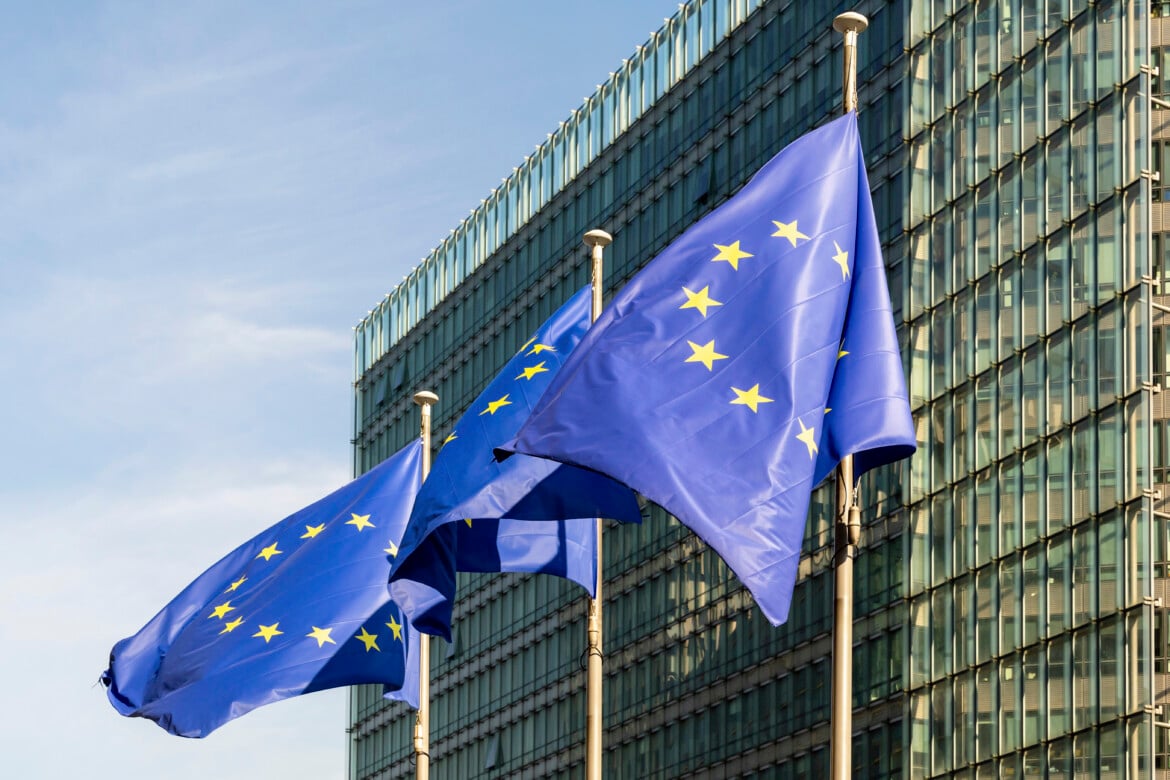
After doing everything possible to avoid the issue in the past, faced with an energy crisis further exacerbated by the war in the Middle East, Italy has agreed to call for a new European tax on energy windfall profits.
Economy Minister Giancarlo Giorgetti, together with his counterparts from Spain, Germany, Austria and Portugal, is seeking a joint response from the European Commission to mitigate the impact of high energy prices on households and businesses.
In their letter, sent to EU Climate Commissioner Wopke Hoekstra, the five ministers called for coordinated EU action: “Such a European solution would act as a signal to the citizens of our Member States and to the wider economy, demonstrating that we stand united and are able to take action,” the document states. “Those who profit from the consequences of the war must do their part to ease the burden on the general public.”
A Commission spokesperson responded promptly: “We are evaluating the proposal and will respond in due course.” According to the signals coming from Brussels, however, the measure would not automatically guarantee the availability of additional financial resources for member states to cover any further budgetary expenses arising from this crisis. UNEM, the Italian trade association of oil companies, reacted to the initiative with “surprise and bewilderment.”
Pasquale Tridico, an economist and European Parliament member who heads the Five Star Movement's delegation, had made a similar proposal: “We have been saying for months that we need to tax windfall profits,” Tridico commented. “I am glad that several governments are now embracing our initiative.”
The move reportedly originated with the Spanish government of Pedro Sánchez, which, in Tridico's view, is “the most forward-looking in tackling the crisis.” And it is acting “to avoid placing the burden on those who are usually the ones affected, who risk having to bear not only the increase in costs but also the brunt of speculation.”
“Now governments are holding big companies accountable for the damages,” Tridico added. “The windfall tax serves exactly this purpose: to make companies pay for the reduction in excise duties. We hope the idea is taken up. As far as we are concerned, in the next plenary session we will ask for it to be brought up for a vote. The Commission and the Council have the immediate leverage; now it could actually pass.”
Annalisa Corrado, a MEP elected with the Democratic Party, seemed less enthusiastic. For Corrado, the measure is acceptable in an emergency, but most likely won’t be a definitive solution, especially for Italy. “The situations in other countries are very different from ours,” she explained. “At a time like this, I understand the search for temporary solutions to cope with price dynamics that are out of control. But in our situation, taxing windfall profits without addressing the mechanism that generated them will likely be of little use.”
Corrado pointed to the PUN – the single national electricity price. In Italy, it is five times higher than in Spain. This gap is caused in part by Italy's dependence on gas; but not only. “In a healthy country, the price of energy is 2.5 times that of gas,” Corrado continued. “Here, it is three to four times higher,” which makes it clear that there are profound distortions in the market.
This is confirmed to some extent by the report from the Italian Regulatory Authority for Energy, Networks and Environment (ARERA), which has sparked parliamentary questions and requests for clarification. This is why a tax on windfall profits might work in the short term, but only in a country where the energy market has few distortions.
“If we allow these types of mechanisms to develop, I doubt that taxation will work,” Corrado added. “In general, I would rather not see windfall profits being generated in the first place.”
In short, there is more to do in Italy. Imposing a tax downstream of the system instead of ensuring the mechanism functions properly in the first place becomes an opaque cost, rather than a progressive measure. Corrado again pointed to Spain as a model: “During the crisis, they put a cap on the price of gas. Most importantly, in the meantime, they invested in renewables.”
Originally published at https://ilmanifesto.it/litalia-salta-sul-treno-ue-per-tassare-gli-extraprofitti on 2026-04-05