
Analysis
Italy declares border zones and prepares to reopen detention centers
Italy has a plan to accelerate asylum denials and detentions. This is a type of confinement, specifically intended to bypass the validation hearings before a judge.
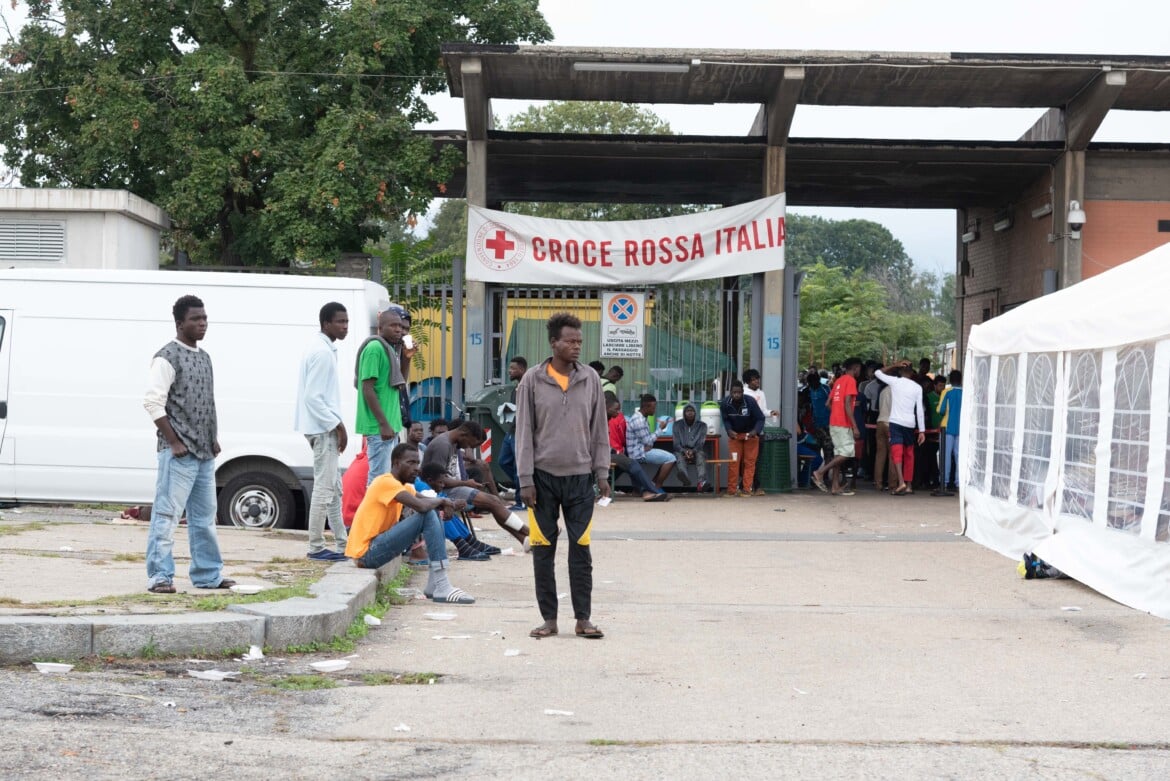
This is the government’s plan ahead of the new EU Pact on Migration and Asylum, which will take effect in a month: reopening of detention centers for asylum seekers in Porto Empedocle and Modica, new border zones at ports where NGOs dock and possible accommodation in hotels. An Interior Ministry document dated March 12 but not yet made public – a document seen by il manifesto – shows the territorial distribution of the spots allocated for the “accelerated border procedures” (PAF) required by Europe.
The mechanism works like this: Italy declares, in a more or less arbitrary manner, a certain area as a “border zone.” Based on a legal fiction, it is assumed that a person located within it is not yet on national territory. Then, the accelerated procedure for the international protection application is applied to them, which provides for a number of exemptions, primarily regarding the right to defense and freedom of movement, with the result of multiplying asylum denials.
From the negotiations with the European Union carried out by Prime Minister Giorgia Meloni's government following the approval of the EU Pact, it emerged that Italy should have 8,932 spots available for PAFs, the highest number at the EU level.
Approximately 4,400 are planned in the border zones created by an August 2019 decree, when Matteo Salvini was at the Interior Ministry. In Ragusa there will be 356, 84 of which will be for detention in Modica. In Agrigento there will be 150, 50 of which will be in detention in Porto Empedocle, which is more complicated but not impossible in the Lampedusa hotspot. Including the provinces, there will be 841 in Crotone, 564 in Caltanissetta, 340 in Cagliari and 328 in Brindisi. Then Lecce, Catania and Messina. The numbers for Matera, Cosenza, Syracuse, Taranto and Trapani are still under review.
The eastern border deserves a separate discussion by itself, where accelerated procedures will be applied to those arriving via the Balkan route: 1,140 spots between Gorizia and Udine, and 427 in the Trieste area.
Furthermore new “border zones” are planned in the disembarkation ports for the NGOs, forced to make extremely long crossings to bring shipwrecked people ashore. For some of them, a location is still being sought, but in any case they will involve Bari, Livorno, Naples, Ortona, Ravenna, Reggio Calabria, Civitavecchia, Salerno and Vibo Valentia. In total, they add up to 3,000 spots.
The last chapter of the Interior Ministry document concerns “potential” border zones, which remain to be evaluated. Ancona, Massa, La Spezia, Savona, Palermo and Genoa are being considered, again due to the arrival of humanitarian ships. In Genoa the envisioned scenario, which is not definitive, is that some migrants will be housed at the Hotel Columbus Sea, which is currently listed as “permanently closed” based on an internet search. The list also includes the airports of Linate, Malpensa and Fiumicino, with 945, 296 and 50 spots respectively, most likely with accommodation in the surrounding areas, at least in the majority of cases.
The model for PAF accommodations has been trialled in recent months in the province of Agrigento, at the Villa Sikania center in Siculiana. Here foreign citizens are not detained as such – as the government attempted to do in Modica, Porto Empedocle and Gjader (in Albania) – but are under the obligation to “not leave the municipal territory where the center is located and to respect the facility's entry and exit times,” according to the notification memos issued by the local police headquarters, Immigration Office Section IV.
This is a type of confinement, specifically intended to bypass the validation hearings before a judge, which so far have thwarted the government's ambitions to extend “detention without a crime” to asylum seekers. If migrants fail to comply with the obligation to stay in the assigned place, they risk the following: termination of reception measures; automatic withdrawal of the international protection application; a detention order and a consequent deportation procedure. It’s not detention, but neither is it freedom.
Originally published at https://ilmanifesto.it/cosi-litalia-diventa-zona-di-frontiera-il-piano-del-governo on 2026-05-08