
Analysis
In Brazil, it’s now legal to destroy the environment – with one click
As a result of Thursday’s vote, Brazil has practically lost its environmental legislation. The dream of every large landowner and extractive company has become reality.
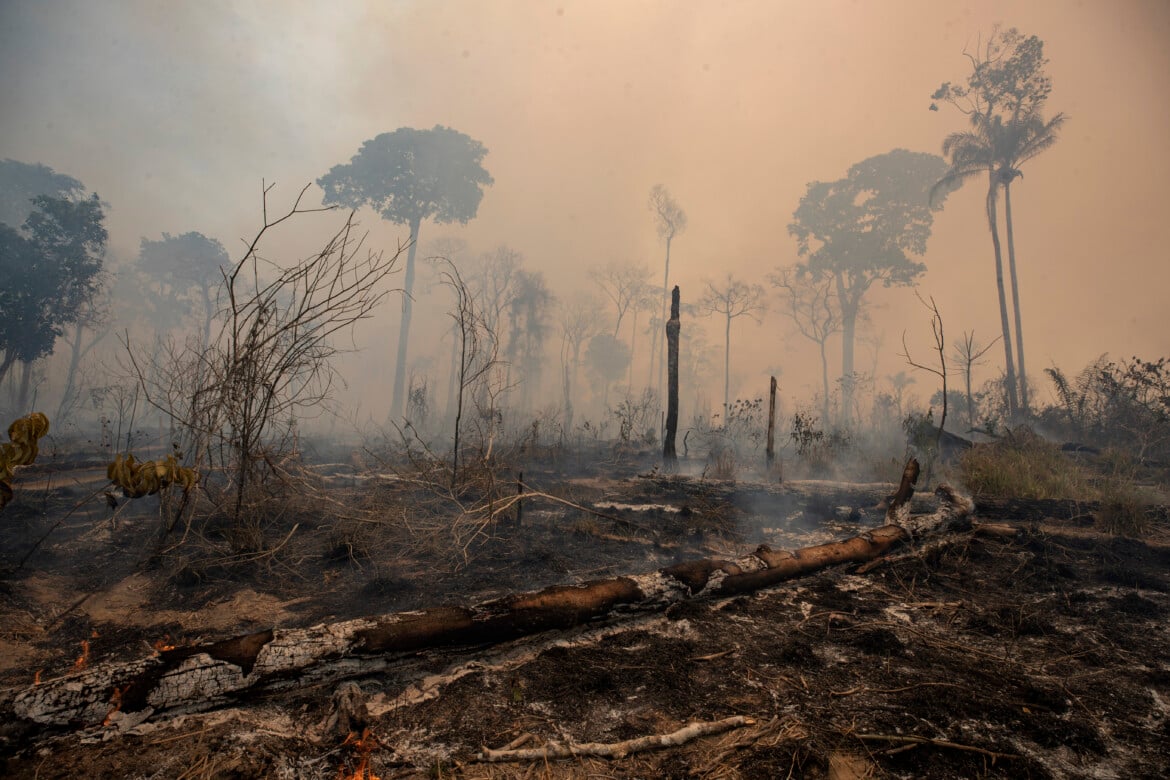
The agribusiness lobby wasted no time in dropping the façade of faux-green aspirations: as soon as the COP30 faded from public attention – which Lula claimed would be the best in history – it overturned, with perfect timing, 56 of the 63 vetoes Lula had placed in August on particular provisions of what has been dubbed the “Devastation Bill,” dealing a decisive blow to Brazil’s already suffering ecosystems.
Crucial to this offensive was Senate President Davi Alcolumbre, who rushed the vote onto the agenda with maximum speed, allowing the “Devastation Bill” to jump a long queue and earning himself the warmest compliments from the ruralist lobby.
As a result of Thursday’s vote, Brazil has practically lost its environmental legislation. The dream of every large landowner and extractive company has become reality.
By rejecting almost all of Lula’s vetoes, Congress has enshrined the very worst version of Bill 2.159/2021 into law, retaining all its most destructive points. Foremost among them is the so-called LAC (Licença Ambiental por Adesão e Compromisso), thanks to which self-certification will be enough for most business initiatives (excepting only those with a high environmental impact). A business will simply have to fill out an online form declaring that its activity presents no risks to the environment. One click and done, without the need for environmental impact studies.
Furthermore, another highly criticized point regarding the LAE (Licença Ambiental Especial) – a simplified environmental authorization procedure for all works considered to be of political importance, regardless of their environmental impact – has been included in a provisional measure to be discussed next week. Introduced via an ad hoc amendment during the decisive Senate vote on May 21 by Alcolumbre himself – who is determined to speed up oil exploitation at the mouth of the Amazon in his home state of Amapá – the LAE would pave the way for highly controversial projects such as the BR-319, the highway connecting Manaus to Porto Velho.
But beyond simplifying and speeding up the granting of environmental permits to an extreme degree, and drastically reducing the role of environmental impact studies, the law tramples on the rights of indigenous and quilombola communities. It weakens the protection of the Mata Atlântica (Atlantic Forest), reduces the role of nature conservation bodies to a minimum and allows states and municipalities maximum discretion to issue permits as they see fit.
When the infamous former Environment Minister of the Bolsonaro government, Ricardo Salles, urged his government colleagues to “let the cattle herd through” (passar a boiada) – meaning to take advantage of the fact that everyone was distracted by COVID to wipe out environmental legislation – this is exactly what he had in mind. In a twist of historical irony, the “herd” has been let through under the presidency of Lula, whose government – in which indigenous peoples had placed their hopes – is not at all free of responsibility.
It is well known that several figures in the government were not opposed to the bill in principle, only distancing themselves from its most ruinous aspects. It is no coincidence that, as revealed by the environmentalist portal Sumaúma, a document prepared by the head of the government’s group in the Senate in May recommended voting “in favor [of the bill] with adjustments.” There was very little in terms of a counterstrategy against the bill.
Then, when an attempt was finally made to contain the disaster – as Lula tried to do by placing 63 vetoes on the bill – it was by then too late to stem the stampede.
The efforts of Environment Minister Marina Silva proved useless. She did not hide her “mourning,” denouncing the demolition of a legislative framework that had taken 40 years to consolidate, precisely at the moment when Brazil is facing the increasingly severe consequences of climate change, amid heat waves, droughts, fires, torrential rains and tornadoes. She raised the possibility of an appeal to the judiciary: it is not possible, she said, to trample with impunity upon Article 225 of the Brazilian Constitution, according to which all citizens have the right to an ecologically balanced environment.
A number of organizations, such as the Observatório do Clima, will certainly turn to the courts, arguing for the evident unconstitutionality of many points of the new law and determined not to resign themselves to the “extermination of the future.”
Originally published at https://ilmanifesto.it/in-brasile-la-boiada-e-legge-distruggere-lambiente-si-puo on 2025-11-30