
Commentary
I'm so bored with the UK
The British political system appears to be moving beyond the two-party system, and the possibility of a Labour Party split is becoming realistic. If this new landscape continues, it would pose a serious problem of representation, especially if the electoral system isn’t changed.
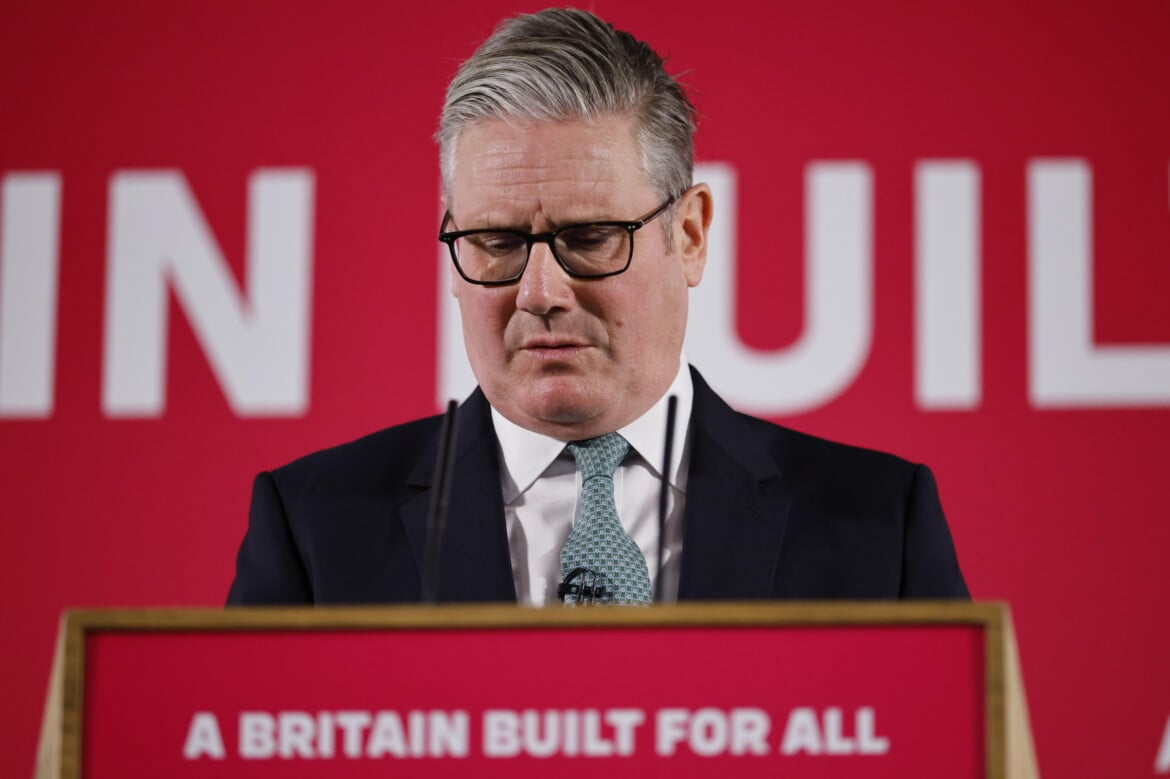
The “Fourth Way” is going nowhere.
Even those who have followed it alongside Keir Starmer – such as Wes Streeting [a close friend and staunch defender of Peter Mandelson, who has been at the center of a wide-ranging scandal due to his ties with Jeffrey Epstein and his appointment as ambassador to the US by Starmer’s administration] and Angela Rayner [a former minister and deputy prime minister who was forced to resign in 2025 over a tax irregularity scandal] – are now acknowledging this.
Both are potential candidates to succeed him as party leader and thus as prime minister. Andy Burnham, the current mayor of Manchester, might also aspire to that role, though he would need to enter parliament to join the race. This is by no means a foregone conclusion, especially if, as it appears, we are seeing an acceleration of the crisis that would require the replacement of the prime minister in the near future. The rules and conventions governing the democratic process in Westminster are relics of a bygone era.
Today the British political system appears to be moving beyond the two-party system (albeit an “imperfect” one, due to the presence, since the early 20th century, of a third minor party – for a long time the Liberals, then the Liberal Democrats) and is heading toward a configuration in which one can clearly identify a right (Conservatives and Reform UK), a left (the Greens) and a center (the Liberal Democrats), but in which the current majority party (Labour) is so fractured that the possibility of an incoming split is starting to become realistic. If this new political landscape continues in this form and becomes stabilized, this would pose a very serious problem of representation, especially if the electoral system isn’t changed.
This issue is not new; it has been addressed by distinguished scholars such as Raymond Plant, who in the 1990s led a Labour Party commission that recommended the adoption of a proportional representation system. The proposal was formalized in 1993, but the party’s landslide victory in the 1997 elections prompted Tony Blair to set it aside to enjoy the spoils of the first-past-the-post system. Plant’s proposal, however, did prove influential to an extent, and, as things stand today – according to Vernon Bogdanor, one of the foremost authorities on the British institutional system – the first-past-the-post system can no longer be considered the “paradigm” of political representation in the United Kingdom, even if it survives in Parliament.
Nevertheless, changing an unwritten constitution – or rather, one that is only partially written and in any case has no canonical document of reference – is no easy task. A situation of instability and radicalization of the political conflict (with a marked tendency toward mutual delegitimization) does not seem the most conducive for introducing radical changes to the functioning of Parliament and the parties. The impression is that we are entering a phase in which the struggle for survival will, at least for some time, take precedence over the ability to plan for the future.
If an election were held under the current system, the best-case scenario would be agreed-upon tactical withdrawals – a technique in which British politicians are masters, but one that requires an ability to find common ground that seems hard to identify at the moment, not only between parties but also within the same party. Everyone remembers Peter Mandelson’s smug expression when he boasted of the effort he had put into preventing Jeremy Corbyn from being elected. It cannot be ruled out that someone might be tempted by the opportunity to give him a taste of his own medicine – especially if, in the end, his associate Wes Streeting were to prevail in the succession battle.
Fifty years ago, on The Clash’s debut album, there was a song titled I'm So Bored with the USA that expressed the British punk band’s annoyance with various aspects of American politics and society that they found harmful. Today, British politics seems destined to lose much of its distinctive character. Not only the parties themselves, but also the cultural traditions from which they stem – and which have fueled them for more than a century – seem to be on the verge of running dry.
To give just one example: saying that Angela Rayner could be a “left-wing” candidate to lead the Labour Party is little more than empty verbiage. It is a tribute to the conditioned reflexes of a ruling class that still applies class distinctions when it comes to accent or social background and tends to overlook far greater differences in terms of policies and principles.
Originally published at https://ilmanifesto.it/politiche-superate-e-sistema-politico-trapassato on 2026-05-13