
Analysis
How the short-lived Union sells itself short
The EU’s ambitions are being sacrificed on the altar of “competitiveness” and the “simplification” of social and environmental rules, which are being blamed for hindering the economy in a difficult time.
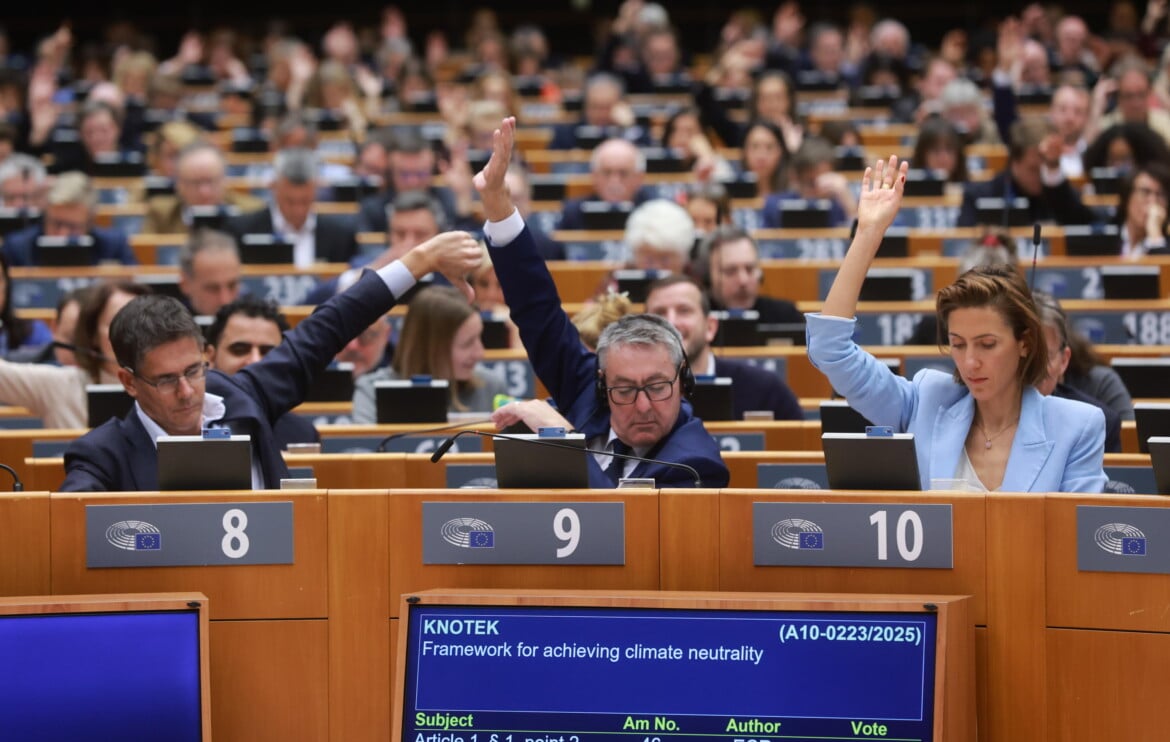
While the world is gathered in Belém for COP30, in Europe the gap between the current political decisions and the climate ambitions set out in the 2019 Green Deal is only growing wider. On Thursday, the European Parliament saw for the first time, on the occasion of a major vote, the advent of a new alliance, different from the so-called “Ursula majority” that has supported Commission President von der Leyen.
The EPP (European People's Party), the largest group, turned its back on the Socialists, Liberals, and Greens and joined up with the far-right Conservatives and Reformists (ECR, Meloni’s group) and Patriots (the group of the Lega and Le Pen) to lower the due diligence requirements for European industries regarding respect for social and environmental rights and the duty to repair.
The obligation to report on the social and environmental impact of production is now limited to companies with more than 5,000 employees and over €1.5 billion in turnover. Furthermore, the threshold for sustainability reporting has also been raised. The European Parliament, as requested by the Commission, is abandoning the project of a European civil liability regime, and multinationals are exempted from climate transition plans. One of the many effects concerns health: the rules for the evaluation and authorization of pesticides and biocides are being weakened.
The European Union, which used to have ambitions of global leadership in the climate transition with the Green Deal, now had to show up at COP30 with a low profile. It arrived in Brazil in poor shape, following the difficult process of reaching an agreement on the 2040 interim CO2 reduction target, which is necessary for reaching net zero by 2050. The last-minute deal reduced the target from the planned 90% to 85%, thanks to the externalization of the CO2 credit market.
With Thursday's first vote on the “Omnibus package,” the European Union’s ambitions are being sacrificed on the altar of “competitiveness” and the “simplification” of social and environmental rules, which are being blamed for hindering the economy in a difficult time.
The right and the far-right are joining forces to impose deregulation, aiming to make it easier for European industry to compete internationally. “A sad moment,” commented the Greens. The far-right is satisfied: not only has the “cordon sanitaire” that isolated it been broken, but according to the Patriots group, which includes Italy's Lega and France's National Rally, the 90% reduction target was simply “a fantasy, while our factories are closing and electricity bills are skyrocketing.”
Global CO2 emissions are rising, but the backlash against environmental rules is growing, as is the repression of environmental movements. The lobbies are in full swing. To prepare the “Omnibus package,” negotiators prioritized meetings with businesses, which defended private interests at the expense of the climate. TotalEnergies and Siemens wrote to the Commission explicitly asking for the Green Deal to be abandoned. The automotive industry, led by the Germans and Italians, has mobilized to demand an extension of the 2035 deadline for banning the sale of new combustion-engine cars in the EU.
The continent's industry, already penalized by Trump's tariffs, fears competition from China but is slow to invest in the transition sectors. And the fossil fuel lobbies are in full-on assault mode: they are instilling doubt about the scientific credibility of global warming, engaging in greenwashing, denouncing “punitive” ecology, exploiting job insecurity, and minimizing Europe’s share of global CO2 emissions (only 6%, implying it's not worth making much effort, as other blocs like the US and China are primarily responsible).
On Thursday, for example, finance ministers met in Brussels to discuss the energy tax directive, which since 2003 has exempted fossil fuels for the aviation and maritime sectors. Panicked about the negative effects on employment, the ecological transition was delayed once more. The European Union is proving more receptive to the push for rearmament as a way to replace jobs lost in the auto industry. In Germany, the CEO of Rheinmetall, Armin Papperger, nicknamed the “Lord of War,” has promised to hire 500,000-600,000 of the 770,000 workers in the auto sector who are currently at risk. The EU is helping Ukraine in the name of defending its values, but also starting to dismantle those same values at home.
Originally published at https://ilmanifesto.it/cosi-si-svende-lunione-dal-fiato-corto on 2025-11-13