
Analysis
How Kenya’s algorithm healthcare automated injustice
These episodes show a common element: algorithms are not neutral. Artificial intelligence systems learn from data and criteria chosen by human beings.
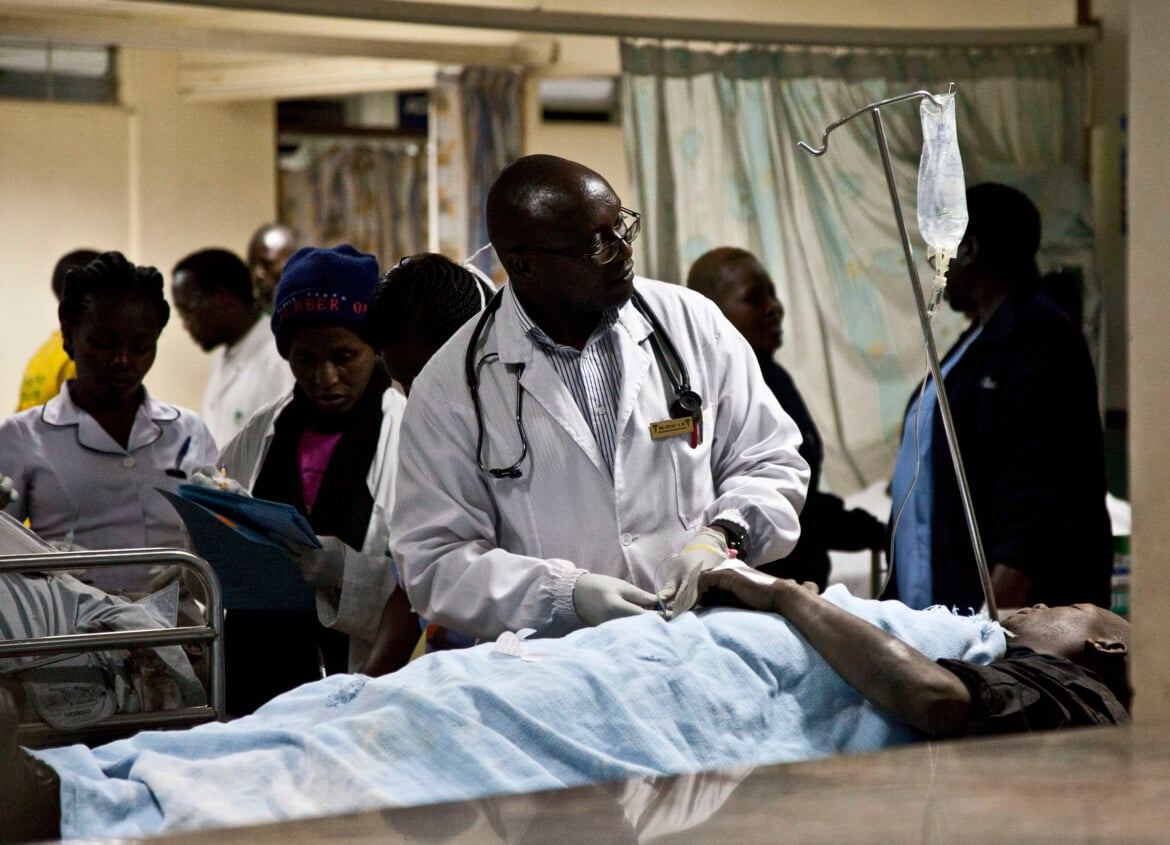
In recent years, many governments have begun using digital tools and artificial intelligence systems to manage public services, distribute subsidies and organize healthcare. These technologies are often presented as solutions capable of reducing waste, streamlining bureaucracy and improving the efficiency of the state. However, the case of Kenya shows how the use of algorithms can also produce new forms of inequality.
The healthcare reform promoted by President William Ruto through the Social Health Authority (SHA) was launched with an ambitious goal: to guarantee broader healthcare coverage in a country where a large part of the population works in the informal economy and lacks easily verifiable income. To determine how much each household should contribute to the healthcare system, the government introduced a method based on indirect indicators called the Proxy Means Test.
Field workers collected information on families' living conditions: type of housing, access to electricity, possessions and other aspects of daily life. This data was then processed by a digital system tasked with estimating citizens' economic levels. In theory, the model should have helped the poorest families by assigning them minimal contributions or offering them forms of public assistance.
In practice, however, many accounts gathered by journalists and local organizations have painted a very different picture.
According to several international investigations, many economically vulnerable families were reportedly assigned contributions considered too high relative to their actual means. Some citizens reported being classified as having a stable economic situation simply because they owned small household appliances or had access to electricity. This fueled sharp criticism of the system. The main problem, according to many observers, is that poverty cannot be reduced to a simple mathematical formula. A family might own a radio or live in a relatively stable home without having enough money to cover unexpected medical care.
The Kenyan case is emblematic because it highlights the limitations of an approach that entrusts automated systems with decisions capable of directly affecting access to healthcare. The Social Health Authority denied many of the accusations, arguing that the new model is in any case more equitable than the previous national health system. According to the government, similar tools are also used in other international welfare programs and are a necessary solution in countries where a large part of the economy is informal.
Nonetheless, the controversy has only grown, partly due to the financial difficulties encountered by hospitals. Several religious and missionary health facilities reported delays in the reimbursements expected from the SHA, warning that the unavailability of funds risks compromising essential services, the purchase of medicines and the payment of staff. The reform has also ended up at the center of legal challenges. Some civic groups have demanded greater transparency regarding the criteria used to calculate healthcare contributions and the management of public resources.
Kenya is not an isolated case. In the United States, some software products used in the court system have been accused of discriminating against ethnic minorities. In the United Kingdom, an algorithm used during the pandemic to assess students led to strong protests.
In the Netherlands, an automated system for monitoring family subsidies gave rise to a national political scandal.
These episodes show a common element: algorithms are not neutral. Artificial intelligence systems learn from data and criteria chosen by human beings. If the data contains biases or errors, the decisions produced by the machine are also likely to reproduce those same inequalities.
The SHA affair demonstrates that technology alone guarantees neither justice nor progress. Without transparency, democratic oversight and protection for the most vulnerable people, even the most advanced digital tools can turn into new mechanisms of social exclusion. The risk is building a future in which inequalities do not disappear, but are simply automated.
Originally published at https://ilmanifesto.it/kenya-ingiustizie-automatizzate-con-lalgoritmo-sanitario on 2026-05-10