
Reportage
Gaza alone removes the rubble that suffocates it
Human effort alone is not enough to face the tens of millions of tons of ruins that must be removed immediately, first of all to open vital roads and ensure people’s safety.
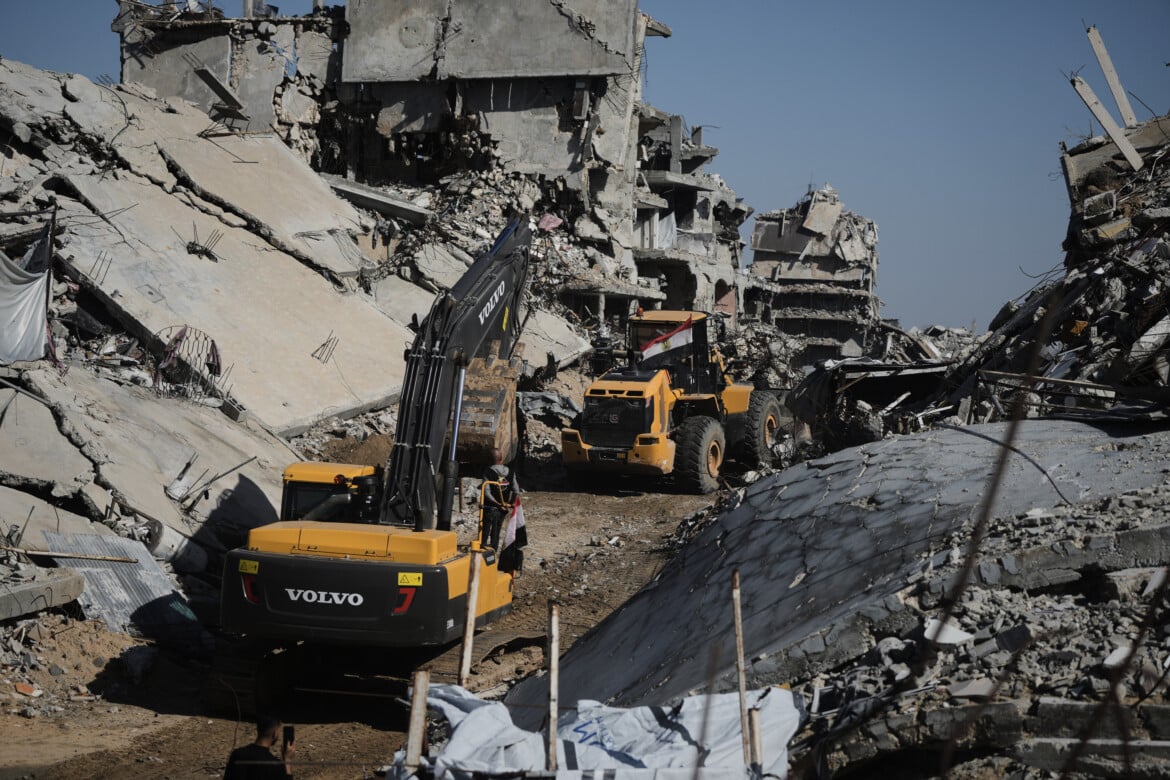
In Gaza, the war has killed not only people but also everything that surrounded them. The city is a mountain of rubble: over 61 million tons of concrete, steel and ash cover the ground, burying trees, crushing the soil and suffocating what little greenery and life remained. The dust is no longer just a trace of destruction; it has become the air we breathe, filling our lungs with toxins instead of oxygen.
The rubble filling the streets and houses is more than just debris: it is a witness to both destruction and the tenacity of life. As I walk through the ruins, I see people who are not waiting for the experts or the heavy machinery that Israel has prevented from entering for years with its security restrictions. It would take at least 10 years to remove tens of millions of tons of rubble with heavy equipment, but Gaza cannot wait that long: the streets are blocked, houses are at risk of collapsing and daily life is suspended.
I see residents with shovels in hand digging and clearing the rubble from their homes and streets. Elderly people, women and youths work side by side, trying to open small paths, reach their homes or simply save what they can. Children run among the ruins – sometimes laughing, sometimes crying – and every movement paints a picture of the city’s resilience.
The rubble has suffocated not only the buildings but also the trees and nature. The olive and palm trees that once lent calm and vibrancy to the streets lie buried under the debris, their leaves charred or torn apart and their branches splayed among the stones. The earth itself seems lifeless, cracked under the sun and crushed by the weight of the debris oppressing every form of life.
Moreover, the enormous rubble has caused severe pollution: the dust kicked up by every movement and the soil containing chemicals from concrete and iron have made the air toxic, increasing the risk of respiratory diseases. The soil and even the water have been contaminated, increasing daily suffering and making the environment harsher and more dangerous for the inhabitants of Gaza.
Even the water itself is dying. Over 85% of Gaza’s water and sanitation facilities are no longer functional, and groundwater – polluted by salt and harmful elements – is the only source for many families. I see people trying to get their hands on just three to five liters of water a day. I hear children crying from thirst, and I feel a deep helplessness in the face of this daily struggle.
Every stone removed, every corner cleared, is a small heroic act. It conveys a message: Gaza will not wait 10 years, as the experts claim. Gaza is creating life here, now, amid the rubble, the dust and the thirst. Every person is rebuilding their life in their own way, even when everything around is collapsing.
An elderly man who was clearing rubble from his house told me: “We won’t wait for someone to remove it for us. Every day we remove what we can, even if it’s little, just to survive.” These words reflect a strong will that refuses to surrender to destruction.
But despite the courage and resilience of the population and its determination to resist the disaster, we cannot ignore that Gaza urgently needs heavy machinery and equipment to remove the enormous rubble suffocating it. Human effort alone is not enough to face the tens of millions of tons of ruins that must be removed immediately, first of all to open vital roads and ensure people’s safety.
Today Gaza is not just a destroyed land; it is a living being fighting to breathe, a suffocating environment, a thirsty earth and hearts that still await the return of life. The rubble and destruction are not just stones and silence; they are a testimony to the population’s resilience, their continuous efforts to bring back life and their desire for the city to be something more than a heap of ruins.
Amid the debris, the dust and the scarce water, I see life trying to reemerge. Partially cleared streets, partially restored houses, the laughter of children: all these scenes convince me that Gaza, despite everything, is not surrendering.
Gaza is suffering from the rubble obscuring the city, the trees, nature and water, but it isn’t waiting for large-scale aid. It creates life with its own hands, stone by stone, breath by breath.
And I am here, witnessing this small miracle every day, trying to share it with others, because Gaza’s story is not only a story of destruction but also of resilience, willpower and life reborn among the ruins.
Originally published at https://ilmanifesto.it/gaza-rimuove-da-sola-le-macerie-che-la-soffocano on 2025-12-03