
Reportage
‘Devastating’ days for UN peacekeepers in Lebanon where Israel uses white phosphorus
The Israeli army has bombed five of the six main access points to the south, all of them bridges crossing the Litani River. On Tuesday, it again used white phosphorus, this time in the Nabatieh region.
“These past few days have been dramatic for us. We lost three peacekeepers in two separate operations while they were on duty. These are devastating losses, and our hearts go out to their families.”
Kandice Ardiel, spokesperson for the United Nations Interim Force in Lebanon (UNIFIL), explained the situation on the ground to il manifesto following the deaths of three Indonesian soldiers on mission. “Although we have had to alter our activities due to the war, we continue to play a fundamental monitoring role: we are the only impartial organization on the ground capable of doing so.”
“We continue to speak with both sides, Lebanon and Israel, to avoid misunderstandings as much as possible,” Ardiel adds. “We help civilians relocate and conduct humanitarian operations on the ground, because there are still many people living in certain areas of southern Lebanon who are extremely isolated. It is an extremely difficult time, but we are optimistic. We continue to believe in a solution, in the end of hostilities. And we must be there when that happens, to help stabilize the situation – as we have always done – preventing misunderstandings between the parties.”
UNIFIL was established in March 1978, a few days after the Israeli army's Operation Litani, the invasion of southern Lebanon in the midst of the civil war (1975 – 1990) that lasted until 2000. Under intense pressure from the United States and Israel, the United Nations Security Council voted unanimously on August 28, 2025, to end the UNIFIL mission on December 31, 2026, and to definitively withdraw the more than 10,000 blue helmets from the Blue Line – the buffer zone established in 1978 in Lebanon along the border – in the months following the deadline.
The decision was made even as UNIFIL itself was documenting daily violations by Israel of the ceasefire agreed upon between Israel and Hezbollah on November 27, 2024. Those violations had reached over 15,000 by the start of this new phase of the conflict, which began on March 2. On Tuesday, a joint statement by ten European Union countries, including Italy, reaffirmed their “strong support for the mandate of the United Nations Interim Force in Lebanon (UNIFIL) in South Lebanon.” Among the statement's signatories were France and the United Kingdom, permanent members of the Security Council.
Israeli Prime Minister Benjamin Netanyahu and his government insist that they need to create a buffer zone in Lebanon extending to the Litani River – 20 kilometers from the border – which Tel Aviv must control. Israeli Finance Minister Bezalel Smotrich spoke in recent days of the need to “change the border,” with the intention of moving it to the Litani River after annexing southern Lebanon.
Meanwhile, Hezbollah and the Israeli army – which is advancing in both the south and southeast of the country – are clashing on the ground. Hezbollah claimed responsibility on Tuesday for several rocket attacks on northern Israel. Tel Aviv is applying the “Gaza doctrine”: flattening the area with airstrikes and advancing. Countless villages near the border have been completely razed to the ground since October 8, 2023, when the war and bombings began.
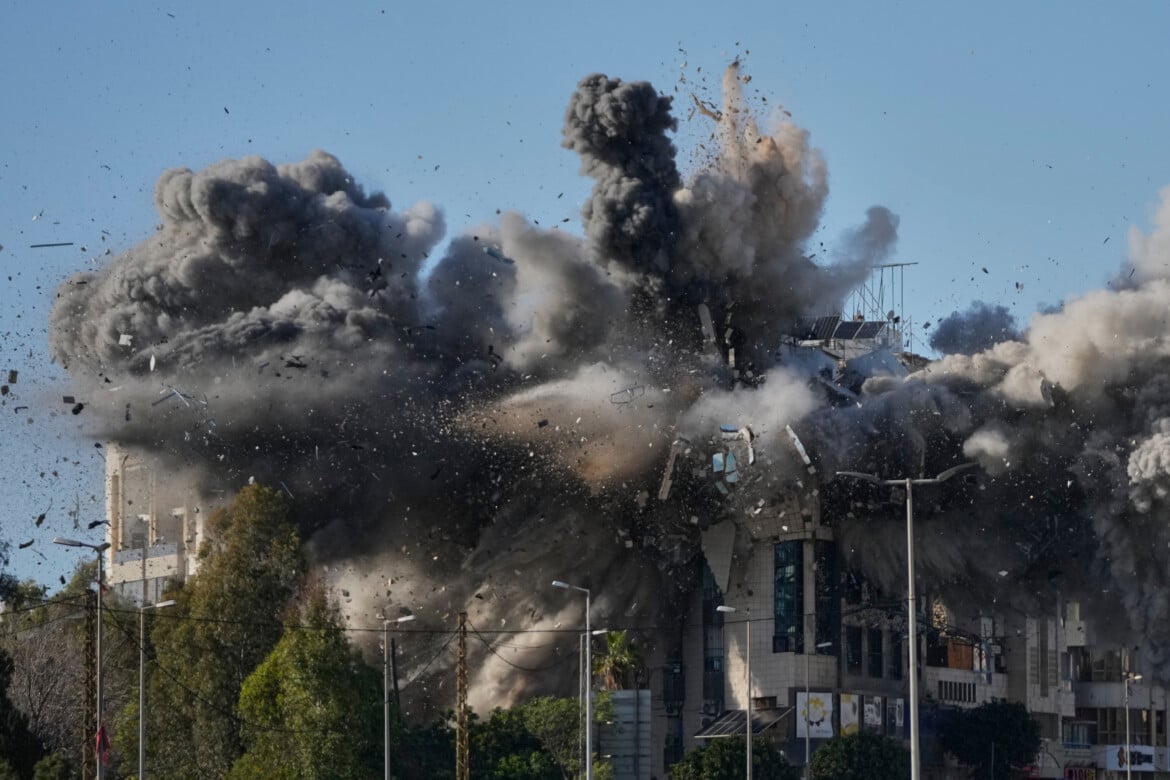
The Israeli army has also bombed five of the six main access points to the south, all of them bridges crossing the Litani River. On Tuesday, it again used white phosphorus, this time in the Nabatieh region. Civilian infrastructure such as roads, water systems and electrical grids have been destroyed. Near Lake Qaraoun, Lebanon's largest dam and water reservoir, evacuation orders have been issued for several villages. On Tuesday, after the bombing of a building along the airport road in Dahieh (Beirut's southern suburbs), traffic was halted for hours.
The death toll since March 2 has risen to 1,268, while the number of wounded was at 3,750 as of Tuesday night. Some 60 healthcare workers have been killed and over 100 wounded. Five Lebanese journalists have been killed by the Israeli army. Lebanon will not be able to withstand the social pressure created by 1.5 million displaced people – out of a population of about six million – for much longer. Israel is striking every neighborhood, whether majority Shiite or not, with panic and hostility spreading.
Originally published at https://ilmanifesto.it/giorni-devastanti-per-unifil-e-fosforo-bianco-sul-libano on 2026-04-01