
Analysis
Between Washington and Brussels, Meloni can no longer bluff
At Palazzo Chigi, there is the reigning conviction that the great agitation of European countries in these days is merely a frantic, belated and impotent attempt to re-enter at the last minute a negotiation process from which they have been cut out.
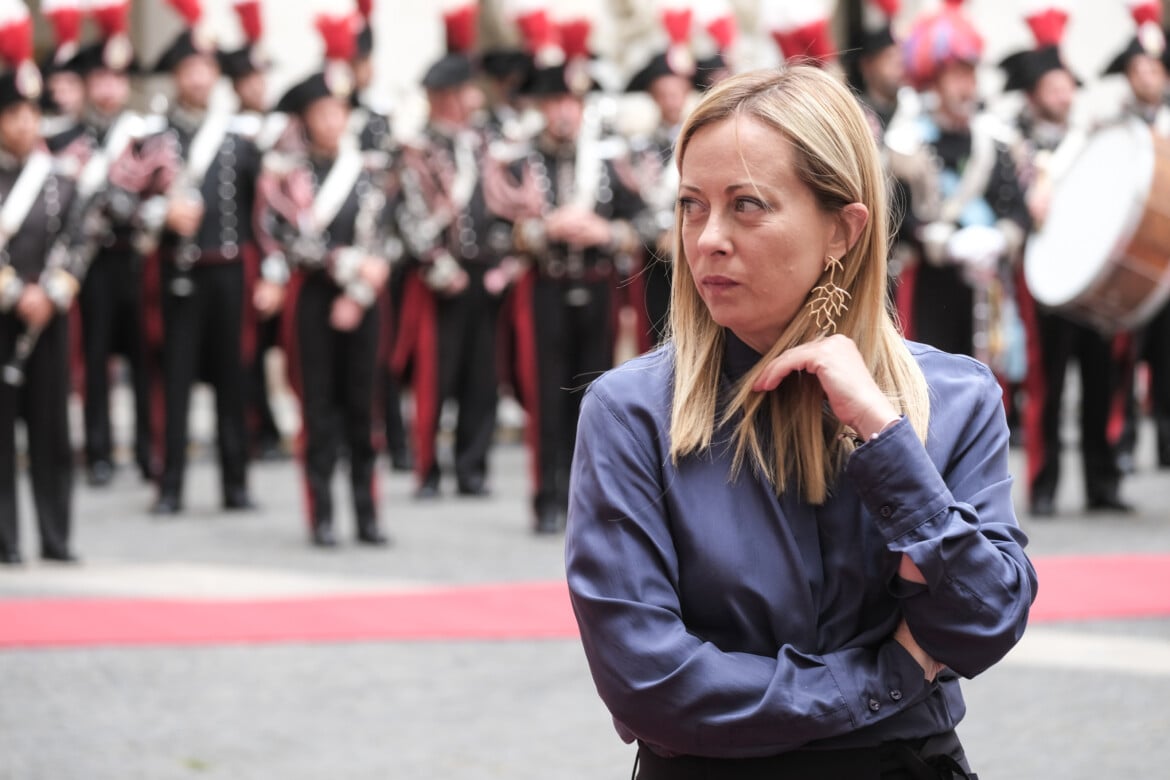
The time when it was possible for Giorgia Meloni to keep a foot in both camps – the European one and the U.S. one – might be soon coming to an end. The leak of the deleted parts of Trump’s document, in which it is openly stated that Italy should be pushed to abandon the EU, has rendered any ambivalence suspicious of high treason.
The tension between the man in the White House and the leaders of the main European countries, which reached emergency levels in a four-way phone call on Dec. 10, has further eroded the Prime Minister’s margins for autonomous action.
In this highly charged context, the choice not to place the decree on sending another batch of arms to Ukraine on the agenda of the Dec. 11 Council of Ministers – not to be confused with the twelfth aid package, which has already been approved without objections from the Lega – threatened to sound like playing along with the American “Europe-wrecker.”
In response, Giorgia ordered an official line to be drawn. Her Minister for Relations with Parliament, Luca Ciriani, indicated two dates, both of which would ensure the decree gets approved before the end of the year: “We have two possibilities, December 22 or 29, but the approval of the decree by these dates is a given. Discussions are inevitable, and even appropriate, but in the end the government has always chosen to stand on the right side: alongside the invaded country. The peace must be just and not imposed on Ukraine.”
For the Lega, which was trying to drag the process out despite knowing it would eventually have to bow its head or face a government crisis, this was a cold shower. And Forza Italia, instead of cooling things down, added an unnecessary escalation: “If the Lega does not vote for the decree, this opens up a serious political problem,” said the party spokesman Raffaele Nevi, whose words are in fact an understatement. If the majority were to split on such a major issue, President Sergio Mattarella would inevitably have to intervene. “We have no intention of putting the government in difficulty. We’re only asking for prudence, as to me the war seems lost,” Salvini said in the evening in a surrendered tone.
On Dec. 11, Meloni participated via video link in the summit of the “Coalition of the Willing,” but she did so with very little enthusiasm and only to avoid criticism, suspicions and friction, especially with Macron. At Palazzo Chigi, there is the reigning conviction that the great agitation of European countries in these days is merely a frantic, belated and impotent attempt to re-enter at the last minute a negotiation process from which they have been cut out, and the only talks that count at this point are those involving Trump, Putin and Zelensky. If this analysis is correct, even the extreme threat brandished by the EU – the transformation of Russian assets deposited in Belgium into a “reparation loan” – should be seen as an instrument of pressure, or a bluff if you will, or in any case as a non-immediate option.
This could be the case. It is true that the Commission has started the procedure to keep Russian assets frozen until the end of the war by circumventing the obstacle of necessary unanimity, but it is also true that the draft decisions for the Council on December 18 speak only of freezing until Russia ceases its war of aggression and compensates Ukraine. This is already a lot, but it is not yet the crossing of the Rubicon that would force the Italian Prime Minister into the kind of clear choice she intends to avoid at all costs.
However, the game is still on. Macron, Merz and Starmer have promised Zelensky that the decision to use those assets will be made at the next Council meeting. The German Chancellor confirmed it on Thursday morning in a press conference in bellicose tones after the meeting with NATO Secretary Rutte. Council President von der Leyen is pushing continuously in that direction, and negotiations and pressure on Belgium continue in order to find a formula that can reassure the country most exposed in the event – or rather the certainty – of a failure to repay such a loan by Ukraine.
In short, there’s no guarantee that the more incisive provisions still missing in the draft conclusions will not appear at the last minute. In that case, Meloni would be forced to make a choice. And even though her heart is drawing her toward America, it would be very difficult for Italy to opt for a rupture with Europe, and with President Mattarella.
Originally published at https://ilmanifesto.it/tra-washington-e-bruxelles-meloni-non-puo-piu-bluffare on 2025-12-12