
Analysis
Ben Gvir gets his wish: A death penalty only for Palestinians
He flooded social media with videos in which he speaks of drowning, strangling, electrocuting and poisoning “terrorists” – which is how figures like Ben Gvir refer to Palestinians.
Violence and supremacism are the two fundamental principles underpinning the law passed on Monday by the Israeli parliament. The noose that lawmakers proudly displayed from their seats in the Knesset is the proper legal symbol of a system that deems Palestinian lives worth less than nothing and, above all, grants the Jewish state such a level of self-proclaimed ethical supremacy that it can formulate laws while remaining immune to them.
The law mandating the death penalty for Palestinians represents a personal victory for National Security Minister Itamar Ben Gvir, an extreme-right figure and leader of the Jewish Power party, who distributes weapons to settlers and Jerusalem residents (but only in Jewish neighborhoods). He waged an intensely violent election campaign on social media and in the streets, promising death wherever he went. He flooded social media with videos in which he speaks of drowning, strangling, electrocuting and poisoning “terrorists” – which is how figures like Ben Gvir refer to Palestinians.
The law, approved with 62 votes in favor and 48 against, mandates hanging as the form of execution. It aims not only to allow but to compel the courts trying Palestinians to impose the death penalty. Technically, Israel already allowed for the possibility of capital punishment – as an alternative to life in prison – in cases of murder, even for its own citizens; throughout its history, however, this has been applied only once, in 1962, against the Nazi Adolf Eichmann.
The new law introduces the death penalty exclusively for those accused of “nationalist” crimes, defined as “terrorist” – meaning for Palestinians. The application of ordinary laws remains guaranteed, however, for any Israeli citizens who commit murder. The very wording of the offense constitutes an exemption solely for Jewish citizens: the act must be committed “with the aim of negating the existence of the State of Israel.” Courts will be permitted to commute the death penalty to a life sentence only in the presence of unspecified “special reasons” or “exceptional circumstances.”
The court may order the death penalty even in the absence of a specific request from the prosecution, and unanimity among the judges will not be required. The penalty will be immediately applicable across all territories occupied by Israel: the West Bank and parts of the Gaza Strip. The military will classify an act as “terrorist” right from the investigation phase, and once the court issues a sentence, the prison administration will have only 90 days to carry it out. This time limit is designed to prevent any appeals or clemency. This is also why some Israeli political and military representatives have warned that the law could violate international law and expose officials to arrest warrants.
Those warnings had no effect, same as the weak objections from France, Great Britain, Germany and Italy, which issued a joint statement on Sunday, March 29. In the document, while acknowledging the “discriminatory nature” of the law, the four European countries primarily challenged the use of the death penalty in general, describing it as a “form of inhuman and degrading punishment.”
Italian Foreign Minister Antonio Tajani, interviewed by television journalist Bruno Vespa, stated that the document served to signal to Israel that “there are things that are not right” with the law.
In the Knesset, sitting in the front row to vote for the law was Prime Minister Benjamin Netanyahu, alongside Defense Minister Israel Katz. Some opposition members had previously stated that they would support the law only if the prime minister publicly endorsed it. “Today we are delivering historic justice,” Ben Gvir declared from the podium. “The time for judgment has come … Today we are creating deterrence. Today we are restoring pride to the people of Israel.” Amid champagne and hugs, he then threatened that “soon we will count them one by one.”
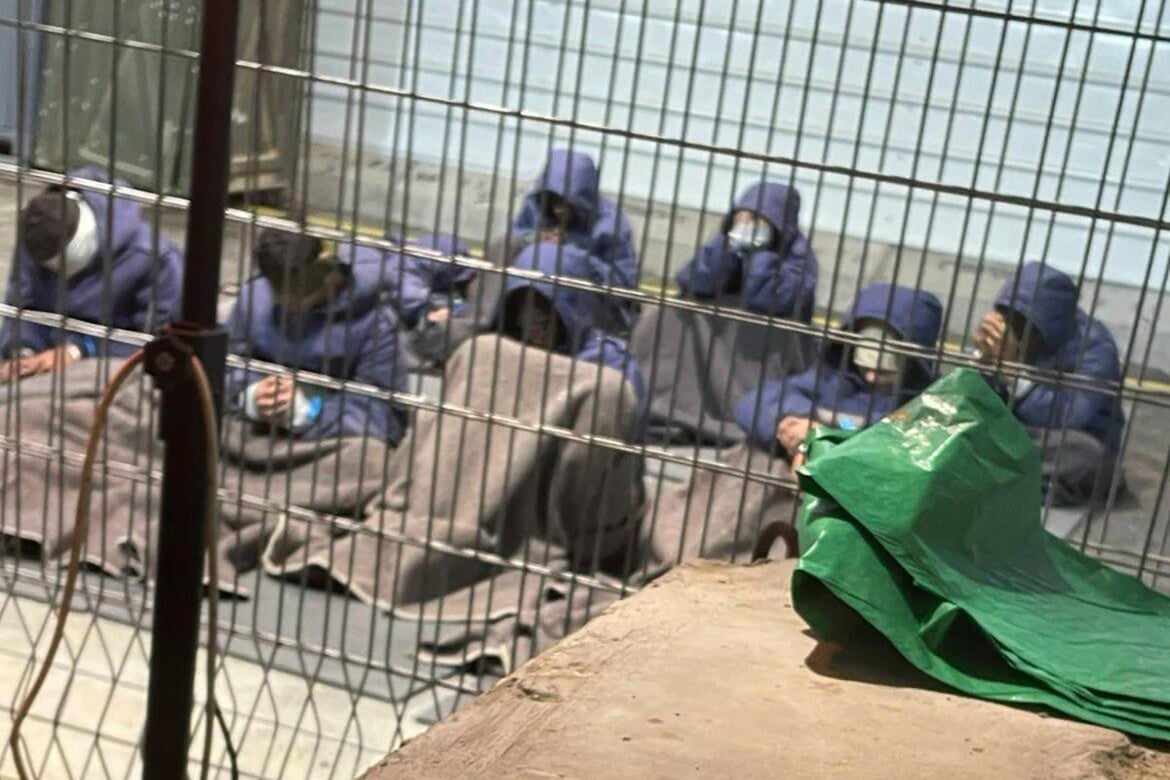
In reality, the supremacist leader had already effectively sentenced a number of people to death even before this law was signed by building a system of torture and horror for Palestinian political prisoners, the vast majority of whom are detained without any charges. Under the minister's orders, food rations have been reduced to bare survival levels. Detainees suffer harassment at the hands of guards and soldiers. The use of torture has been described as “systematic” by the United Nations. Sexual abuse, assaults and a lack of medical care are commonplace. Ben Gvir always defends the military's actions, including those of soldiers who were filmed raping a Palestinian detainee, causing him horrific internal injuries.
The Hadash-Ta'al coalition, composed of Israeli Arab parties, has announced it will file a petition with the Supreme Court seeking to overturn the law, describing it as an act of blatant institutional racism that officializes a system of apartheid against the Palestinian people. It is a selective mechanism that exposes Arabs to the maximum penalty while “guaranteeing impunity for Jewish criminals.”
That impunity has long been in effect in Israel. It leaves illegal settlers free to kill, beat and steal, and has spared soldiers from even an investigation after massacring a Palestinian family returning home with their four children.
Originally published at https://ilmanifesto.it/il-cappio-israeliano-si-alla-pena-di-morte-solo-per-i-palestinesi on 2026-03-31