
Commentary
Antisemetic massacre in Australia leads to call for new crackdown on guns
"I’m Jewish. I love being Jewish. I love my Jewish community and family. I’m horrified at the rise in violent antisemitism. I am heartbroken. AND I know how this brutality will be used to justify maintenance and support of an ethnostate that is still committing genocide in Gaza."
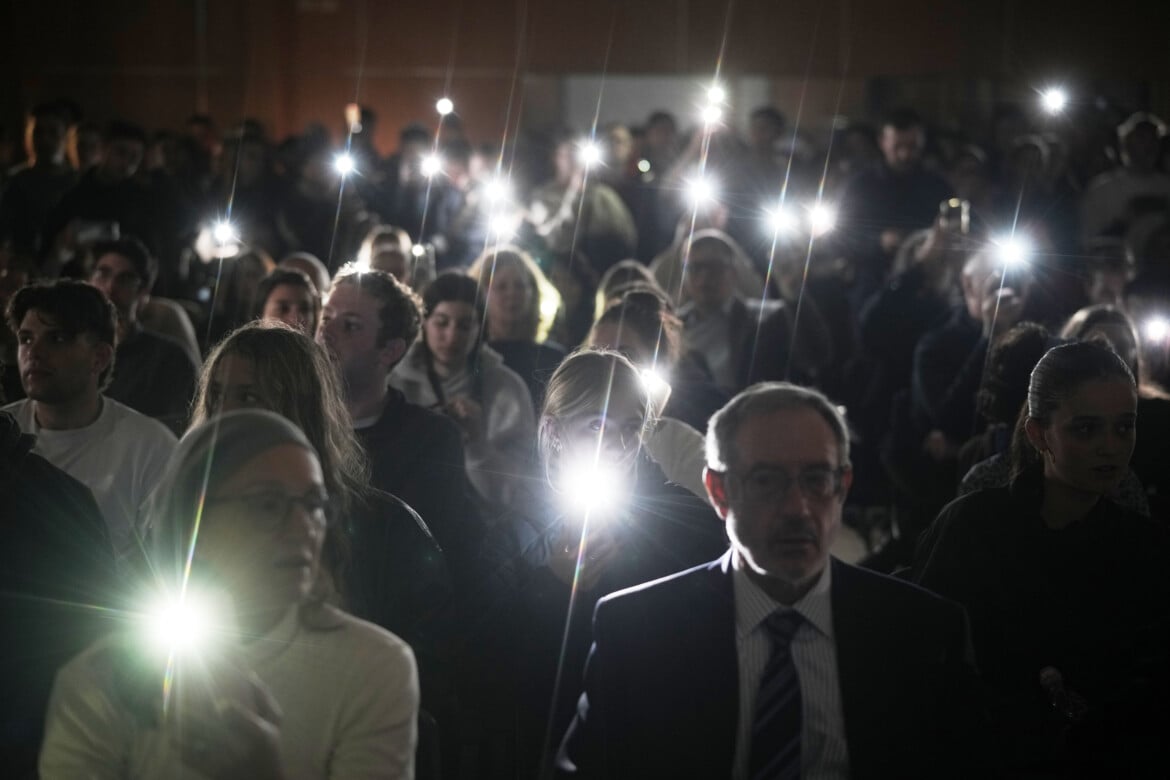
In the late afternoon of Sunday, December 14, 2025, dozens of gunshots interrupted the celebrations on the eve of the Jewish holiday of Hanukkah on Bondi Beach in Sydney, Australia, where hundreds of people had gathered. The latest casualty figures are 16 dead and at least 40 injured, and what is certain is that this was an antisemitic massacre, the most violent in the country’s modern history.
Among the victims was Rabbi Eli Schlanger, a member of the ultra-Orthodox Chabad movement; Alexander Kleytman, 87, a Holocaust survivor; and a 10-year-old girl named Matilda, whose family has asked that her surname not be published.
According to reports from the Australian police, the two assailants are believed to be father and son, identified as Sajid Akram, 50, and Naveed Akram, 24; the former was killed at the scene of the attack while the latter was hospitalized with injuries. The scene that is most emblematic for the chaos of those minutes is a video circulated on various platforms: a passerby runs toward one of the two gunmen, tackles him and wrestles the weapon from his hands.
The passerby is Ahmed al-Ahmed, 43, a fruit seller, who according to collected testimonies prevented an even higher number of victims; he was injured and underwent surgery. The Premier of New South Wales, Chris Minns, called him “a true hero.”
Prime Minister Anthony Albanese called the attack “an act of pure evil, an act of antisemitism, an act of terrorism” and added that for the moment there is no “evidence to suggest links to a wider cell or organized network.” The federal government then announced the intention to further tighten gun licenses and controls on gun sales. “Licenses should not be in perpetuity,” because “people’s circumstances can change,” said Albanese.
Among the options being discussed are limits on the duration of gun licenses, on the number of weapons one can have and stricter requirements for obtaining them. The implicit comparison is with Port Arthur, the 1996 massacre in Tasmania that led to the National Firearms Agreement and the national crackdown that made Australia one of the countries with the strictest gun regulations.
Prime Minister Benjamin Netanyahu rushed to accuse the Albanese government of having fueled the antisemitic climate in the country: “Your call for a Palestinian state pours fuel on the antisemitic fire. It rewards Hamas terrorists. It emboldens those who menace Australian Jews and encourages the Jew hatred now stalking your streets.”
A December 14 op-ed in The New York Times by Bret Stephens took the same line, connecting the massacre with the rhetoric of “globalize the intifada” and attributing political and cultural responsibility for the Bondi Beach attack to the political camp that stands in solidarity with Palestine.
Majed Bamya, Deputy Permanent Observer of the State of Palestine to the UN, expressed solidarity with the Australian Jewish community, condemning the attack as a “horrific” act and saying he was “shocked” by the attempts of those seeking to justify an antisemitic terrorist attack. He then added that “we are lost if we learn to hate each other for our identities,” stressing that no one should be held responsible for the actions of others just because they share the same faith or national origin: “This applies to Jews around the world and to Muslims around the world.”
“I have not fully metabolized my thoughts on the Bondi attack,” commented American Jewish writer Katherine Wela Bogen on Threads. “I’m Jewish. I love being Jewish. I love my Jewish community and family. I’m horrified at the rise in violent antisemitism. I am heartbroken. AND I know how this brutality will be used to justify maintenance and support of an ethnostate that is still committing genocide in Gaza. I know how our grief and fear will be weaponized against Palestinians. I know how global pundits will use this, cynically, to bolster the occupation.”
The political use of the accusation of antisemitism is certainly not new. It is a central element in the vision of the Netanyahu government and, more generally, of a part of the Western establishment. One sees it especially in Germany and in the United States: in the universities and in the repressive management of protests in solidarity with Palestine – many of which are led by progressive Jews – and more generally in policies against migrants, particularly Arab and Muslim ones.
In recent years, we have witnessed the tragic tendency to silence or delegitimize any criticism of the policies of the state of Israel, wielding the cudgel of “antisemitism.” But there is also the opposite tendency, just as tragic and equally dangerous: those who, in the name of anti-Zionism, mask their own antisemitism and justify, minimize and even celebrate the attacks against Jewish minorities in the West.
Antisemitism, we must recall, is a centuries-old phenomenon that produced systematic violence which culminated in the mass destruction of two-thirds of European Jewry. It did not disappear in 1945. Moreover, the Bondi Beach attack did not happen in a vacuum. A sequence of episodes – including acts of vandalism, intimidation, arson and deadly attacks – has eroded the perception of safety for Jewish schools, businesses and places of worship across the world.
In Italy, four bills (by Romeo, Scalfarotto, Gasparri and Delrio) on fighting antisemitism are currently under examination by Parliament. They all use the definition by the International Holocaust Remembrance Alliance (IHRA), disputed internationally by numerous scholars of the history of antisemitism and the Shoah because in its application it risks conflating political criticisms of Israel with antisemitism, and treats the latter as an exceptional phenomenon. This framework also eliminates the idea that antisemitism and racism are part of the same social grammar, even while this remains tragically true.
Originally published at https://ilmanifesto.it/strage-antisemita-di-sydney-albanese-stretta-sulle-armi on 2025-12-16