
Commentary
A brief history of violent extractivism
With the Trump administration, we have entered what we might call the “extractivist model” of senile capitalism: all against all to grab resources, from oil to lithium and rare earths.
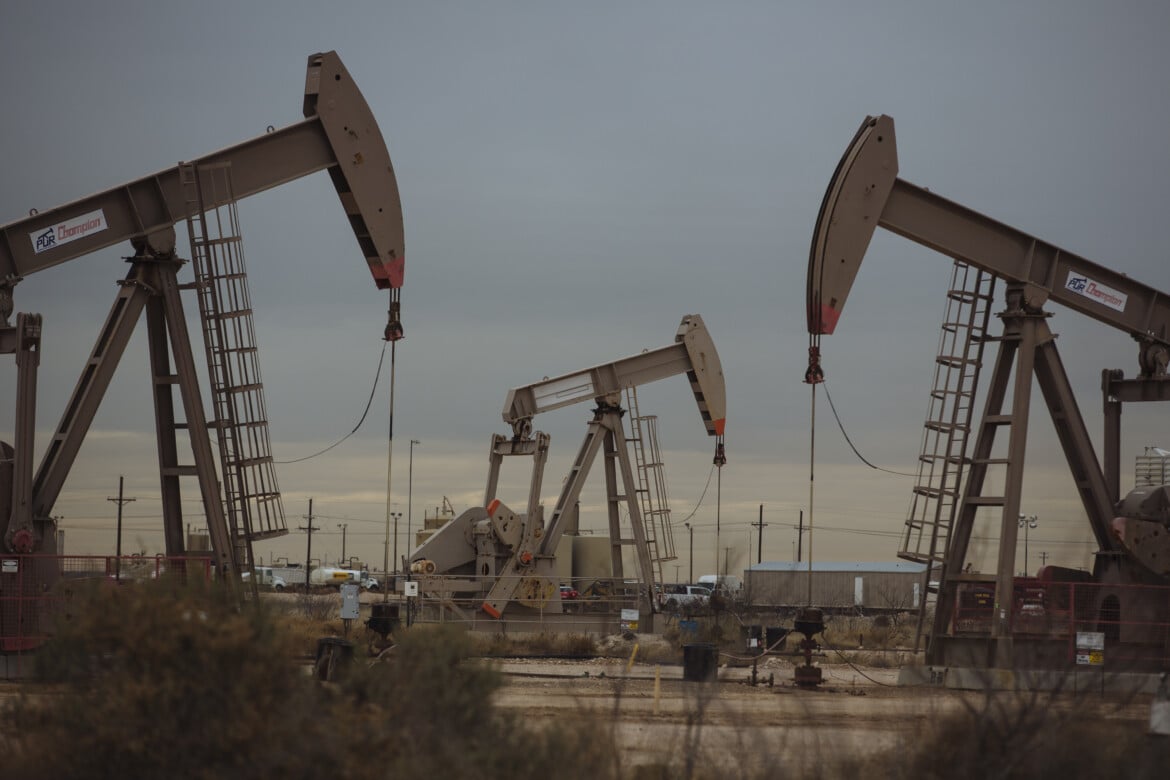
Before the recent closure, about 20 million barrels of oil passed through the Strait of Hormuz every day. But why “barrels” and not liters, tons or hundredweights?
It all began on August 28, 1859, in Titusville, Pennsylvania, thanks to a certain Edwin Drake – no relation to the far more famous English privateer from three centuries earlier, Sir Francis Drake. It was he who decided that the way to make money from that geyser of blackish, viscous liquid spurting out of the ground was to pour the oil into the only containers available: 40-gallon whiskey barrels, plus an extra two gallons to account for evaporation and shipping losses, protecting the buyer and avoiding disputes.
A few years later, a group of producers met in Titusville and officially standardized the barrel's capacity at 42 gallons. The Petroleum Producers Association adopted the standard in 1872, the US Bureau of Mines followed suit in 1882, and we have all used it ever since.
It is no exaggeration, therefore, to argue that in world history, 1859 is more important than 1577, the year Francis Drake set out to circumnavigate the globe. Titusville turned out more important than London, and the aforementioned Edwin Drake has done more damage to the planet than all the pirates in the world could have done over the past 450 years. The oil age began in Pennsylvania a little over a century and a half ago.
Cars, plastics, global warming and the myriad other things that mark the fossil fuel era in which we currently live were born from that well – along with wars and pollution, of course. Ida Tarbell, who would later become John D. Rockefeller's nemesis, wrote in her autobiography: “No industry of man in its early days has ever been more destructive of beauty, order, decency, than the production of petroleum.”
When oil appeared in Pennsylvania, Tarbell wrote, “every tree, every shrub, every bit of grass in the vicinity was coated with black grease and left to die. Tar and oil stained everything. If the well was dry, a rickety derrick, piles of debris, and oily holes were left, for nobody ever cleaned up in those days.” It would be a century before the Exxon Valdez disaster, which in 1989 spilled some 41 million liters of crude oil into Prince William Sound, polluting 1,200 miles (2,000 kilometers) of coastline in Alaska, but the stage was already set.
For more than a century, until 1970, the US remained the world's leading oil producer, but consumption exploded in the meantime: oil was used for light, heat, travel and furnishing homes, which had since become scattered across the famous suburbs – residential neighborhoods that forced every family to own at least two cars. In 1975, the energy crisis highlighted the country's growing dependence on imports: an extra 6.3 million barrels per day were needed in addition to what was coming out of American wells. By 1995, the daily deficit had risen to 9.4 million barrels. In response, Congress tried to pass energy-saving measures and mandatory fuel-efficiency standards for cars, both of which met with little success. The real solution was to go find the oil where it was: in Iran, Venezuela and Saudi Arabia. These three were vassal states until Ayatollah Ruhollah Khomeini ousted the Shah in 1979 and Hugo Chávez won the election in 1998 (the House of Saud is still going).
Imports automatically meant skyrocketing military spending to maintain “readiness” at all times to defend the American Way of Life – that is, the right to consume 3,500 liters of oil per capita, compared to 1,400 in Germany, 1,200 in Italy and 600 in China, all of which are industrial powers in their own right.
Weapons, as we know, are made to be used, so it is no surprise that wars, covert operations and sanctions against “disobedient” countries have multiplied. Former Federal Reserve Chairman Alan Greenspan openly admitted this in his 2007 memoir: “Whatever their publicized angst over Saddam Hussein's ‘weapons of mass destruction,’ American and British authorities were also concerned about violence in an area that harbors a resource indispensable for the functioning of the world economy. I am saddened that it is politically inconvenient to acknowledge what everyone knows: the Iraq war is largely about oil.”
It was Iraq back then, Venezuela in January, and Iran today – attacked and bombed because “there's a lot of money to be made,” as Donald Trump wrote on social media when announcing the ceasefire and the start of negotiations with Tehran. There is oil in Canada too, which Trump would like to turn into the 51st state of the Union, but the White House has said that it will not invade, at least “for now.” With the Trump administration, we have entered what we might call the “extractivist model” of senile capitalism: all against all to grab resources, from oil to lithium and rare earths.
This is a spectacular return to 19th-century colonialism, a mechanism for enriching oneself at the expense of others through the use of force. It is an updated, global-scale version of 16th- and 17th-century piracy. Perhaps Edwin Drake in Pennsylvania and Sir Francis Drake in London were part of the same lineage after all.
Originally published at https://ilmanifesto.it/estrattivismo-violento-malattia-senile-del-capitalismo on 2026-04-12